Harriman Expedition

Expedition Leader
Edward H. Harriman (1848-1909). In 1881, he bought his first rail company outright, thirty-four miles of track in upstate New York, and his name soon became synonymous with "railroad."

The Participants, a Selected List
(Biographies for Devereux, Elliot, Emerson, Gannett, Kearney, Ridgeway, and Saunders are not included in the following list)
Prof. William H. Brewer (1828 -1910). He was a founding member of The Arctic Club. Thus, in 1899, he was the ideal Harriman scientist -- experienced, respected, and enchanted with the Arctic. Brewer was seventy-one, and one of the oldest passengers on the Elder. Even so, he held his own, competing with Muir as a story-teller, tramping about all day on glacier fields.

John Burroughs (1837-1921). He had published hundreds of articles on birds, flowers, and natural wonders of all sorts -- his 27 books had sold over two million copies. He was the most famous nature writer of the day. His fame made him a natural choice for the Harriman trip.

Frederick V. Coville (1867-1937) At 32, he was one of the younger men on board. He took advantage of every opportunity to hike, camp, and explore Alaska's coast. He stayed for three days on Columbia Glacier with Palache and Gilbert. He also spent a good deal of time talking with the more seasoned scientists, particularly Fernow.

William Healey Dall (1845-1927). Aboard the Elder, Dall was officially the "paleontologist, geographer, etc.," and he was certainly the undisputed expert on Alaska. His shipmates were often surprised by his wealth of knowledge, both in biology and in respect to the Native cultures of Alaska.

Bernhard E. Fernow (1851-1923). Fernow was a pioneer in the American forestry movement. In 1882, he organized the American Forestry Congress and called for laws to protect National Forest preserves. By 1899, when Harriman tapped him for the expedition, Fernow was chief of the Division of Forestry at the United States Department of Agriculture, and a founder of the School of Forestry at Cornell.

G. K. Gilbert (1843 - 1918). Gilbert was the top field geologist of his day, and an obvious choice for the scientific team on the Harriman Expedition. Gilbert used his time on the Elder to consider the physics of glacial geology and geomorphology. He camped out with John Muir, took many photographs, and set out to build a reliable set of data about Alaskan glaciers that would be useful in his own time and for years to come.

George Bird Grinnell (1849-1938). Grinnell was editor of Forest and Stream, the leading natural history magazine in North America, the founder of the Audubon Society and the Boone and Crockett Club, and an advisor to Theodore Roosevelt. Glacier National Park came about largely through his efforts.

Charles Augustus Keeler (1871-1937). Keeler was the director of the Natural History Museum at the California Academy of Sciences. On the Harriman Expedition, Keeler served as poet and bird-watcher. He contributed the descriptive essay on birds that was later published. Like Muir, he was disturbed by the killing of animals for specimens.

Trevor Kincaid (1872 - 1970). As an insect specialist, he assumed that the icy Alaskan coast would yield but few discoveries, but he learned that "the presence of a glacier does not necessarily mean the absence of life." One species he collected and described was the "glacier worm," familiar to Alaskan Natives, but largely unknown to the scientific community.

C. Hart Merriam (1855-1942). It was little wonder that, when Edward Harriman needed help with his proposed Alaska Expedition, he turned first to C. Hart Merriam. Merriam was able to bring together an eminent staff of professionals in a very short time, a feat all the more impressive when one remembers that the telephone had yet to be invented.

John Muir (1838-1914). Muir had traveled to Alaska on extended expeditions in 1879-1880, and in 1890. He was a recognized authority on glaciers there; in Glacier Bay, one of the largest glaciers was already named for him. It was this expertise in glaciology, along with his broad background in nature study, that prompted Harriman to invite him to join the expedition.

Charles Palache (1869 - 1954). Working with the other researchers of the Elder, he took many of the camping trips, including a three-day stay at Pacific Glacier with John Muir, and a ten-day stay on Popof Island. He collected specimens and made notes that would eventually be incorporated into the published reports of the trip.

William E. Ritter (1856 - 1944). He studied sea and coastal creatures in California, becoming one of the few experts in this relatively unstudied branch of zoology. It was this expertise that led Merriam to invite Ritter on the Harriman Expedition. Aboard ship, Ritter was known as one of the "worm men," for his dogged method of collecting marine invertebrates.

William Trelease (1857 - 1945). While on the Elder, he worked with the others involved in botany and collecting specimens, but tended to play second fiddle to Muir, Gilbert and the other, more talkative scientists. He was first and foremost a scientist, not a story-teller.

The Artists on the Elder
Edward Curtis (1868 - 1952). Curtis went to Alaska thrilled with the prospect of making pictures in such a grand landscape. On the trip, he captured thousands of images, working with the cumbersome equipment of the day. He went to great lengths to get his pictures; at one time, he nearly capsized in a small boat that floated too near a calving glacier. He took over 5000 photographs on the expedition.

Frederick S. Dellenbaugh (1853 - 1935). Though Dellenbaugh was a seasoned traveler when he joined the Harriman Expedition in 1899, his journals and letters show that he was truly excited to be setting out on this trip. Several of his paintings from the trip were used as illustrations for the first two volumes published after the Harriman Expedition.

Louis Agassiz Fuertes (1874-1927). On the expedition, Fuertes went to great lengths to collect as many types of birds as he could. He sketched constantly, chasing through woods and across glaciers to catch sight of rare species. He made quick images of birds on the wing, and retained memories of their calls. He shot and skinned hundreds of birds, and took copious notes on what he was seeing and learning. He simply couldn't get enough of Alaska.

R. Swain Gifford (1840 - 1905). Gifford was a logical choice for Harriman. His paintings had been used in the two-volume Picturesque America, and he had illustrated works about Europe and Northern Africa as well. His style showed nature in an intimate way, the human figures as small details, the colors muted greens and grays. The works from the trip clearly convey the remote beauty of landscape in the high latitudes.


A Brief Chronology of the Harriman Expedition

Planning the Expedition: March, April and early May, 1899
The plans for the Harriman Expedition began with a doctor's order: Edward Henry Harriman, an exhausted captain of the railroad industry, was told to take a long vacation. He chose Alaska, and decided to turn the family vacation to a full-blown scientific expedition. In two-and-a-half month's time, he and C. Hart Merriam chose the scientists and artists. Harriman himself supervised and paid for the outfitting of the George W. Elder -- new staterooms, salons, livestock stalls, research spaces and a library with over 500 books on Alaska. At the same time, he made arrangements for the invited guests to travel by rail to the departure city of Seattle.

May 23, 1899 - New York City
Harriman arranged for a special train to carry his guests from New York City to Seattle. The Harriman family and many scientists traveled in luxury from Grand Central Station.
 
"On the Great Divide." The special train from New York stops to let the travelers explore the western prairie.
Click image for a larger view

May 31, 1899 - Seattle
All passengers had arrived in Seattle, but they spent hours waiting for the ship to be loaded. Cargo included an organ, a piano, canvas tents, hunting gear, traps, art supplies, a lantern slide projector, a graphophone, food and fresh water. The boat left the dock shortly before 6:00PM.

June 2, 1899 - British Columbia
The expedition visited the Victoria Museum on Vancouver Island, then cruised north along the coast of British Columbia. Those aboard took advantage of the cruising time to get to know one another.

June 3, 1899 - British Columbia - Lowe Inlet
Cruising northward, the Elder moved from protected waterways into the Pacific. The first bouts of seasickness were reported by a number of passengers. The boat stopped near Lowe Inlet and a group of scientists went ashore to explore Princess Royal Island.

June 4, 1899 - Metlakatla
The expedition visited Father William Duncan's island missionary settlement, and explored the rich forests of the area. Fuertes discovered an unusual type of large, tamed raven. Fischer became so caught up in his explorations of the island's forests that he missed the boat as it pulled away from the dock. After this, everyone would sign in and out using a peg on a large board painted by Dellenbaugh.

June 5, 1899 - Wrangell
The Elder pulled into Wrangell early in the morning, and, with only a few hours to explore this spot, the group fanned out to explore the town and the surrounding area. Saunders scoured the coast for seaweed specimens, the birders headed into the forests, armed and ready to shoot specimens, and the photographers spent their time taking pictures in Wrangell, a boom-town on the decline. It was the first exploration on Alaskan soil, and everyone seemed determined to make use of their time.

June 6, 1899 - Treadwell Mine and Skagway
The party explored the mining operations near the Skagway, a mining town that was enjoying a boom, partly because of gold, partly because it was the starting point for the White Pass railroad, taking miners into the gold fields. Five scientists -- Palache, Ritter, Saunders, Kearney, and Kincaid -- set out on a small steam launch boat, to explore the area for several days. This was one way the Harriman Alaska Expedition made up for the relatively brief time they spent at any one place.

June 7, 1899 - White Pass Railroad
The party rode the twenty-one miles to the summit of White Pass, traveling through the steep Dead Horse Pass and gateway to the gold rush.

June 8, 1899 - Cruising to Glacier Bay
The Elder returned to Juneau to pick up the five scientists who'd been in the field, then steamed toward Glacier Bay.

June 9 through 14, 1899 - Glacier Bay
The expeditioners spent five days exploring Glacier Bay. One highlight was the overnight hike to "Howling Valley," which, according to Muir, was filled with game. Twelve men -- six crew members, Harriman, Merriam, Captain Kelly, Drs. Morris and Trudeau, and Grinnell -- hiked for almost 24 hours in the hopes of finding bear. The other scientists spent the days exploring the Muir and other glaciers in the bay. Fuertes, Fischer and Ridgeway traveled to Point Gustavus to collect specimens. Muir and others discovered that the Grand Pacific Glacier had split into three lobes, and they proposed the largest be named "Harriman Glacier." The Elder departed Glacier Bay on the morning of the 14th.
 

June 15 through 18, 1899 - Sitka
The party explored Sitka, once the capital of Alaska and the headquarters of the Russian-American company. They visited the nearby hot springs, purchased furs from Tlingit trappers, and saw in architecture and custom the Russian influence in Alaska. Harriman made a graphophonic recording of Tlingit songs. They depart Sitka on the morning of the 18th.
 
June 19, 1899 - Yakutat and Malaspina Glacier
The group explored the mission settlement in Yakutat, and several hunting parties set out for bear and other game. Harriman was impressed with a man called "Indian Jim," who knew much about the local coastline. He was hired as a guide for the duration of the voyage.

June 20 through 23, 1899 - Malaspina Glacier and Disenchantment Bay
Explorers mapped the huge glacier, which Dall had named on an earlier trip. Others observed the Natives at work in their annual seal hunt. Harriman purchased a sea otter pelt, a rare specimen since the otter had been hunted to virtual extinction. The Elder left Disenchantment Bay on the morning of the 23rd.

June 24, 1899 - Orca and Prince William Sound
The expedition visited the Pacific Steam Whaling Company's salmon cannery at Orca. The visitors found several opportunities to speak with gold miners heading back to the United States.

June 25 through 29, 1899 - Prince William Sound
The party explored Prince William Sound, including, on June 26, the narrow inlet at Barry Glacier that opened up to reveal an unexplored fiord, now known as "Harriman Fiord." Several scientists put ashore in the fiord for a camping-exploration trip, while others stayed on the Elder, steaming back to Orca to fix a broken propellor blade.

June 30, 1899 - Kulak Bay
The original destination for the day was Cook Inlet, but Harriman, upon hearing that bear would be more easily found elsewhere, changed course for Kodiak Island in the Aleutians.

July 1 though July 4, 1899 - Kodiak Island
The hunting party was successful: Harriman, with the help of several packers and guides, shot his Kodiak bear. Dellenbaugh, in a conversation with a traveler from another ship, learned about a remote and apparently abandoned Tlingit village near Saxman, on the south coast of Alaska. The party celebrated the 4th of July in town of Kodiak with speeches, music and boat races. The Elder left Kodiak on the morning of the 5th.
 
July 5 and 6, 1899 - Shumagin Islands and Bering Sea
The Elder steamed along the Alaskan Peninsula, now entering territory that few pleasure vessels had ever entered. Seas grew rougher and the weather colder as they neared the Bering Sea.

July 7, 1899 - Shumagin Islands
Ritter, Saunders, Palache, Kincaid and Kelly set up a camp on Popof Island in the Shumagins, and remained there to collect specimens for ten days. The boat steamed north through the Bering Sea.

July 8, 1899 - Bering Sea, Unalaska and Bogoslof
John Burroughs made arrangements to stay behind in Dutch Harbor, Unalaska. He'd had enough of the rough, cold Bering Sea, but John Muir and Charles Keeler discovered his plan and coaxed him back on the ship. Later that day, a party took a launch to Bogoslof and were charged by sea lion bulls on the beach. Harriman, true to form, charged back.

July 9, 1899 - St. Paul, the Pribilofs
As the Elder reached the Pribilof Islands, Merriam noted with alarm the steep decline in the number of fur seals since his trip there in 1891. The party visited St. Paul in the Pribilofs only briefly, then the boat steamed toward Siberia. Shortly after leaving, the Elder became hung up on a rock, but the boat was not damaged.

July 10, 1899 - Bering Sea
From the Pribilofs, the ship steamed toward Siberia, because Mrs. Harriman had a desire to put her foot on Siberian soil and see the polar regions. The boat continued northward, much to Burroughs's disappointment.

July 11, 1899 - Plover Bay, Siberia
The party comes ashore at Plover Bay in Siberia, and visits a small Eskimo settlement. The Eskimoes were clearly impoverished and in very poor health.

July 12, 1899 - Port Clarence
After leaving Siberia, the boat headed for Port Clarence. Here they were able to visit with Eskimos, gold miners and whalers.

July 13, 1899 - St. Lawrence Island
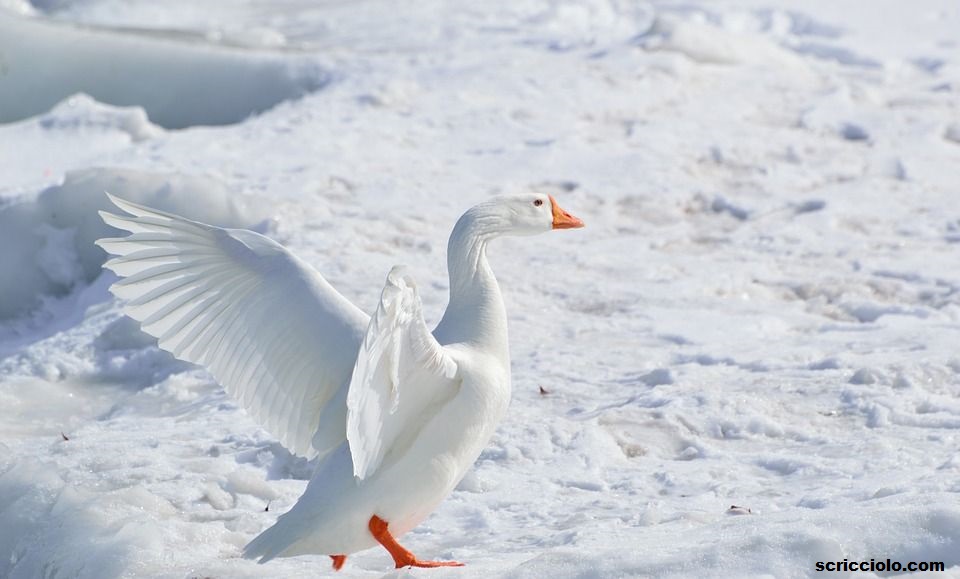
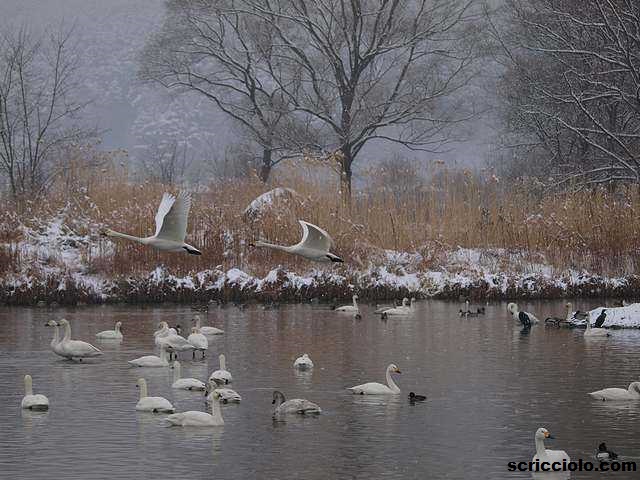
Harriman still hoped to bag another bear, this time a polar bear. Merriam, out exploring with two of the Harriman daughters, saw what he thought were two polar bears in the distance. They followed behind the white animals for two miles, and finally realized they were chasing arctic swans.

July 14, 1899 - Hall Island
Fuertes found this island rich in seabird life, and easily shot and collected a large number of the island's sea birds.

July 15, 1899 - St. Matthew Island
Some in the party continued to hunt polar bear, unsuccessfully. Fuertes and Fischer captured two blue foxes. This marked the end of the Elder's outward journey and the ship charts a homeward course.

July 16 through 19, 1899 - Steaming Southward
The research party left behind on the Shumagins is retrieved.

July 20, 1899 - Return to Kodiak
The return trip to Kodiak included a birthday party celebration for Cornelia Harriman.

July 21 through 25 - Steaming Southward
Except for a brief stop in Juneau, the Elder continued the homeward trip.

July 26 and 27, 1899 - Cape Fox
The Elder anchored off of Cape Fox village, the uninhabited Tlingit village that Dellenbaugh had been told about earlier in the trip. The crew collected many artifacts, and took them aboard the Elder.

July 28 through 30, 1899 - Steaming to Seattle
The Harriman Alaska Expedition ended as the Elder steamed into Seattle on July 30, 1899.