Carl Linnaeus 1707-1778
Youth and early education, 1707-1727
Lund 1727-1728
Uppsala 1728-1731
Friendship with Pehr Artedi 1729-1735
Lapland journey 1732
Further student years at Uppsala 1733-1735
Years abroad, mostly in Holland 1735-1738
Medical practice 1738-1741
Professorship at Uppsala 1741-1772
Decline and death 1772-1778
Achievements
Linnaean binomial nomenclature
The correspondence of Carl Linnaeus
Editorial policy
Carl Linnaeus’s paternal grandfather, like most Swedish peasants and farmers
of his times, had no surname and was known, in accordance with the old
Scandinavian name system, as Ingemar Bengtsson, being the son of Bengt
Ingemarsson. When his son, Carl’s father, Nils Ingemarsson (1674-1733),
went to the university of Lund, he had to provide himself with a surname
for registration purposes. He invented the name
Linnaeus in allusion
to a large and ancient tree of the small leaved linden (
Tilia cordata
Miller,
T. Europaea L. in part), known in the Småland dialect
as a “linn”, which grew on the family property known in the seventeenth
century as Linnegard. Other branches of the family took the names
Lindelius
and
Tiliander from the same famous tree. Linnaeus himself referred
to this when he described
Tilia in 1745 as being
vastissima in
pago Stegaryd Sunnerboae Smolandiae unde Tiliandri et Linnaei dicti.
The name
Linnaeus was thus of Latin form from the beginning. Linnaeus,
having been ennobled in 1761, first took the name of Carl von Linné
in 1762, by which time he had published all of his most important works.
Nils Ingemarsson Linnaeus, like his relatives Carl Tiliander and Sven Tiliander,
became a clergyman. In March 1706 he married Christina the daughter of
another clergyman, Samuel Brodersonius, rector of Stenbrohult, in Småland,
which is situated by an inlet of Lake Mócklen. Their son Carl was
born on 23 May (13 May old style) 1707 at Råshult nearby. Samuel
Brodersonius died in December 1707 and in June 1708 his son-in-law Nils
Linnaeus moved with his family into the rectory at Stenbrohult. Here young
Linnaeus grew up amid a profusion of flowers, those native and wild in
the marshland and meadows near the lake, those exotic and cultivated in
his father’s well-stocked rectory garden, the whole parish seeming “as
if adorned by Flora herself”. Nils Linnaeus grew more kinds of plants in
his garden than anyone else in Småland and his son wrote in 1745
that “this garden inflamed my mind from infancy onwards with an unquenchable
love of plants”. In another way it also decisively influenced Carl Linnaeus’s
life-work. As a little boy he loved to work with his father in the garden
and constantly asked him the names of plants and as frequently forgot them
until his exasperated father told him that he would never be given any
more names unless he remembered them. After that, according to Linnaeus
himself, the heart and soul of the five-year-old boy were set on remembering
the names. Thus began his long preoccupation with the naming of organisms.
It may well be that the rules in his
Critica botanica for making
generic names short, unambiguous, euphonious and memorable sprang ultimately
from his difficulties with them as a child.
In 1714 aged seven he was sent for schooling at Växjö, where
he remained until 1727. He did not prove an apt and brilliant pupil in
a school intended mostly for would-be clergymen and state officials. According
to a contemporary document summarised by Telemak Fredbärj in 1973,
lessons at Växjö began at 6 a.m. after prayers and hymn-singing
and ended at 5 p.m.; of the lessons each week, seventeen were devoted to
Latin, fourteen to theology and ethics, four to Greek and nine to mathematics,
physics and logic together. Linnaeus found this dry fare little to his
taste but it gave him a good grounding in Latin, without which he could
never have reached the learned world of Europe in later years. His parents
hoped he would become a clergyman; his teachers thought otherwise; they
said he was most deficient in the subjects such as Greek, theology and
eloquence most needed for a priest and he himself had no inclination that
way. Fortunately indeed for Linnaeus and for posterity a distinguished
local doctor Johan Stensson Rothman (1684-1762), while agreeing that Linnaeus
could never become a priest, assured his parents that he would become a
famous doctor and gave him personal instruction in botany and the principles
of medicine. Rothman introduced him moreover to the sexuality of plants
as expounded in Sébastien Vaillant’s Sermo de structura florum
(1717), which had a dramatic effect on his adolescent imagination by revealing
that sex comparable to that of human beings existed in flowers. Linnaeus
took the comparison a long way, to the extent indeed of seeing the common
marigold (Calendula officinalis) as a plant practising “necessary
polygamy” with “the married females barren, the concubines fertile”; in
other words, the ray florets of the flower head produced seeds but the
disc florets did not. It led him to study flowers intimately, examining
hundreds to discover how they managed their sexual affairs and procreation.
He admitted in 1738 that “their singular structure and extraordinary function
attracted my mind to enquire what Nature had hidden in them. They commended
themselves by the duty they perform since the propagation of plants rests
entirely on them alone”. These observations, transformed into human terms,
formed the basis of his so-called “Sexual System” of classifying plants
into major groups based on the numbers of their genital organs, of their
stamens and stigmas.
As a country parson in a Småland parish Nils Linnaeus was a poor
man and he and his wife feared that as a doctor their son might be just
as poor despite the length and cost of a medical education. Carl Linnaeus
was, however, determined on a medical career and in August 1727 he entered
the University of Lund. The two Swedish universities, Uppsala and Lund,
were then at their lowest ebb, with a few ageing and discouraged professors
and little money for the maintenance of such studies as anatomy, botany
and chemistry. Some private tuition was available but it usually cost too
much for very poor students like Linnaeus. It is a characteristic of his
life that at every period of crisis Linnaeus’s impressive ability, industry
and enthusiasm, despite the unfortunate first impression given by a certain
brashness and egoism, brought influential people to his aid. He could never
repay them with money but later he gratefully enshrined their names in
the literature of botany:
Rothmannia,
Stobaea,
Celsia,
Gronovia,
Lalvsonia,
Cliffortia,
Burmannia
and
Boerhavia commemorate these friends and benefactors. In Lund
the eminent physician and naturalist Dr Kilian Stobaeus (1690-1742) befriended
him, let him live and eat in his house and attend his lectures without
payment; he lent him books and showed him his collection of plants dried
and glued to paper, something Linnaeus had never seen before. He soon began
to make a similar herbarium of his own. Thus began the great Linnaean herbarium
of such outstanding international importance. To help name his plants gathered
on excursions he bought M. D. Johren’s
Vade mecum botanicum seu hodegus
botanicus (1710), a guide to Joseph Pitton de Tournefort’s system of
classification, and thus began the formation of his rich natural history
library now belonging to the Linnaean Society. Linnaeus retained a lifelong
gratitude to Stobaeus who “loved me, not as a pupil, but as if I were his
son”. Unfortunately, in May 1728 Linnaeus became ill and after recovery
returned to his family at Stenbrohult. He did not set foot in Lund again
until twenty years later. Nevertheless Linnaeus’s ten months in Lund under
the affectionate and stimulating guidance of Stobaeus must be counted as
possibly the most formative period in his career as a naturalist.
During the summer of 1728 Rothman convinced Linnaeus and his parents that
he should continue his medical studies not in Lund but in Uppsala, where
some twenty years ago Rothman himself had studied. Unfortunately, Uppsala
had also declined. The two revered professors in medicine, Olof Rudbeck
the Younger (1660-1740) and Lars Roberg (1664-1742), were aged and could
not obtain funds for the proper maintenance of the university hospital;
there was no longer any clinical teaching and the university botanic garden
was poorly stocked. During the whole of his student years the future professor
of botany never heard a lecture on botany! His limited money ran out and
he must have thought how much better he had been in Lund with kind-hearted
Stobaeus. Luckily another learned man Olof Celsius the Elder (1670-1756),
a theologian and naturalist, noticed the hungry-looking student in the
botanic garden and, presumably surprised to find a student studying, enquired
what he was doing, then invited him home and gave him a free room and meals.
As a New Year’s gift Linnaeus presented Celsius with a manuscript dissertation,
Praeludia
sponsaliorum plantarum, on the marriage of plants and their sexual
analogies with animals. It came to Rudbeck’s attention. He needed someone
to give botanical instruction on the plants of the botanic garden to students
at the end of the spring term and the author of this dissertation seemed
the very man for the duty, even though still a student. Linnaeus, ever
confident of his own abilities, assented and he lectured very successfully
from May to July. Thus began his long fruitful career as a university teacher,
from which no less than twenty-three of his own students became themselves
professors. In 1695 Rudbeck had travelled as a young man in Lapland and
had made extensive botanical and zoological specimens and observations,
together with drawings, in that vast then virtually unknown wilderness.
Most of these perished in the terrible fire of 1702 which raged across
Uppsala and destroyed three-quarters of its buildings. Thereafter he lost
heart and turned his attention largely to philology and raising a family,
which numbered 24 children, probably an academic record by Linnaeus’s time
in 1730. He invited Linnaeus to live in his house as tutor to his four
youngest sons, with opportunities to use his rich library. Meanwhile Linnaeus,
dissatisfied with Tournefort’s widely used classification of plants, had
begun to make one of his own based on the numbers of stamens and stigmas
and to describe the genera methodically. He used his time diligently, beginning
in Rudbeck’s house the works later published as
Bibliotheca botanica
(1736),
Critica botanica (1737),
Genera plantarum (1737),
Classes
plantarum (1738), and also studying birds and insects. Thus by the
age of 24 Linnaeus had laid the foundations for all his later work.
When Linnaeus arrived in Uppsala in 1728 he learned about another medical
student interested in natural history, Pehr Arctaedius, who had begun his
studies there four years earlier but was absent because of his father’s
illness. His family name had apparently been coined by his grandfather,
a clergyman like his father, when dwelling in northern Sweden, but grandson
Pehr altered it to the Italian-sounding Artedi when a student at Uppsala.
He was born in 1705. Living near the sea at Nordmaling, Västerbotten,
on an inlet of the Gulf of Bothnia, he became especially interested in
fish, but his interests were wide and embraced alchemy as well as natural
history. On his return to Uppsala in 1729 he and Linnaeus became close
friends. Their talents and interests complemented one another. Together
they worked out a plan for studying and documenting the natural world between
them, Artedi to deal with fishes, reptiles, amphibians, the Umbelliferae
among plants, Linnaeus with birds, insects and the plant world in general.
Artedi possessed a very thorough, methodical, philosophical and scholarly
mind and was well versed in modern languages and the classics. There would
seem little doubt that the methods for the diagnosis, description and naming
of organisms (apart from the binomial system of nomenclature) which Linnaeus
used were developed by these two young men in co-operation. Unfortunately,
Artedi was drowned on 28 September 1735 by falling into an unlit canal
at night in Amsterdam; science lost one who might have proved the greatest
systematic zoologist of the eighteenth century. Henceforth the task of
revealing the works of the Creator in an orderly manner was to be Linnaeus’s
alone. Artedi had left in manuscript a very detailed monographic work on
fish and, edited by Linnaeus and entitled
Ichthyologia sive opera omnia
de piscibus, which was published in Leiden in 1738.
As they sat by the fire in 1731, during the long winter nights, Rudbeck
now seventy years old talked to Linnaeus about Lapland, its wildness and
strangeness, the ways of the Lapps, its birds and its flowers, and filled
his young listener with eagerness to explore its natural history. The problem
was to raise the money for so long a journey. Linnaeus, anticipating the
methods of later student fund-raisers, drew up a memorandum emphasising
both the desirability of a naturalist visiting Lapland and the attributes
requisite in such a person, from which it would appear that the most suitable
one for the task would be no other than Linnaeus himself. He accordingly
offered his services and asked the Royal Society of Sciences at Uppsala
(Regia Societas Scientiarum) for 600 copper dalers. This was certainly
a modest sum to cover a journey of about 3,000 English miles (5,000 km)
lasting from 12 May to 10 September 1732. Even Linnaeus, thrifty Smålander
though he was, found in fact that it cost more. He travelled along the
coast of the Gulf of Bothnia to Umeå, then went inland by way of
Lycksele to Lycksmyren and then back to Umeå, then along the coast
northward to Luleå, then across Norrbotten by way of Jokkmokk and
Kvickkjokk to Rörstad on the Norwegian coast and back again to Luleå.
From Torneå he then went northward along what is now the Finnish
frontier to Kengis and Vihangi and then back to Torneå. The rest
of his journey was southward along the Finnish coast to Turku (Åbo)
and by sea back to Sweden. Linnaeus kept a journal of his Lapland journey
but never published it. An English translation entitled
Lachesis Lapponica
or a tour in Lapland was published in 1811, the Swedish original not
until 1888 and 1913. This abounds with interesting observations. The journey
was the most adventurous that Linnaeus ever made; it has been assessed
by his fellow-countrymen as the most fruitful single scientific expedition
ever made in Sweden both for its immediate botanical results and its influence
on Linnaeus’s later career. It led to the publication in 1737 of his
Flora
Lapponica which is of prime importance for the nomenclature of Arctic-Alpine
species; Linnaeus’s Lapland specimens, on which this was based, are in
Paris.
Linnaeus’s subsequent career falls into five periods, the main events
of which may be summarised chronologically as follows:
| 1733 |
Linnaeus lectured on mineralogy at Uppsala; death of Christina
Brodersonia (1688-1733), Linnaeus’s mother. |
| 1734 |
Linnaeus lectured on dietetics at Uppsala; travelled through
Dalarna (Dalecarlia); at Christmas met Sara Elisabet (Sara Lisa) Moraea
(1716-1806), daughter of town physician of Falun. |
| 1735 |
Linnaeus engaged on 23 January 1735 to Sara Lisa; left Sweden
in April 1735 in order to obtain a doctor’s degree at the accommodating
but now extinct Dutch university of Harderwijk and to get his works published. |
| 1735 |
Linnaeus travelled through north Germany and Denmark to
Holland; awarded degree of doctor of medicine at Harderwijk; befriended
by Johan Frederik Gronovius, Herman Boerhaave and Johannes Burman, in whose
house he lived; published Systema naturae. |
| 1736 |
Linnaeus published Bibliotheca botanica, Fundamenta
botanica; moved to George Clifford’s house at Hartekamp near Haarlem
as his resident physician and naturalist; visited England at Clifford’s
expense; Pehr Artedi accidently drowned at Amsterdam, his manuscript on
fish bought by Clifford and given to Linnaeus. |
| 1737 |
Linnaeus published Genera plantarum, Flora Lapponica,
Critica
botanica; completed manuscript of Hortus Cliffortianus listing
the plants of Clifford’s garden with detailed synonymy, the best illustrated
and one of the most important of Linnaeus’s publications; edited Artedi’s
material. |
| 1738 |
Hortus Cliffortianus and Artedi’s Ichthyologia
published; Linnaeus visited Paris; returned to Sweden. |
| 1738 |
In September 1738, aged 31, set up in practice as a physician
in Stockholm; befriended by the politician Count Carl Gustaf Tessin (1695-1770). |
| 1739 |
Linnaeus made first President of Royal Swedish Academy of
Sciences, of which he was a founder member; appointed physician to the
Admiralty; on 26 June 1739 married Sara Lisa; Tessin made leader of the
Hats political party, Marshal of Swedish Diet. |
| 1740 |
Linnaeus published second edition of Systema naturae. |
| 1741 |
Carl Linnaeus the Younger, born at Falun on 20 January.
Linnaeus appointed professor of medicine and botany at the University of
Uppsala; travelled through the Baltic islands of Öland and Gotland
to survey their natural history, economic products, etc. |
| 1741 |
On 25 October Linnaeus, aged 34, gave inaugural address
at Uppsala on the necessity of travelling within one’s own country; death
of Queen Ulrika Eleonora. |
| 1742 |
Linnaeus restored Uppsala Botanic Garden. |
| 1743 |
Elisabet Cristina (1743-1782), Linnaeus’s eldest daughter,
born; Adolf Fredrik (1710-1771) of Holstein-Gottorp elected as successor
to Swedish throne; part of Finland ceded by Sweden to Russia. |
| 1744 |
Marriage of Adolf Fredrik to Lovisa Ulrika (1720-1782). |
| 1745 |
Linnaeus published Flora Suecica, Ölandska och Gothländska
resa, an interesting account of his 1741 journey, with first use of
binomial nomenclature for species in the index. |
| 1746 |
Linnaeus travelled through Västergötland; published
Fauna
Suecica; in September 1746, aged 39, hard at work on manuscript of
Species
plantarum. |
| 1747 |
Linnaeus honoured with title of Archiater (chief
physician); published Flora Zeylanica, an important work on the
plants of Ceylon, and Wästgöta resa, dealing with his
Västergötland journey of 1746. |
| 1748 |
Linnaeus published Hortus Upsaliensis; reached Tetradynamia
in manuscript of Species plantarum, then compelled by other activities
and the strain of overwork to put it aside for a year. |
| 1749 |
Linnaeus published Materia medica, Vol. 1, Amoenitates
academicae and Vol. 1, Pan Suecicus, a thesis using binomial
nomenclature for species tested as fodder for livestock; Louisa (1749-1839),
Linnaeus’s third daughter born (the second, Sara Magdalena, died in 1744,
the year of her birth). |
| 1750 |
Linnaeus dictated Philosophia botanica to his student
Pehr Löfling when bed-ridden and too unwell to write; resumed work
on Species plantarum but did little. |
| 1751 |
Linnaeus published Philosophia botanica; Pehr Kalm
returned from America with exciting specimens; Sara Christina (1751-1835),
Linnaeus’s fourth daughter, born; in June 1751 again resumed work on Species
plantarum; death of Fredrik I, accession of Adolf Fredrik and Lovisa
Ulrika as King and Queen of Sweden. |
| 1752 |
Manuscript of Species plantarum completed; Pehr Osbeck
returned from China. |
| 1753 |
Linnaeus, aged 46, published Species plantarum, starting
point of modern botanical nomenclature. |
| 1754 |
Linnaeus published the fifth edition of Genera plantarum. |
| 1756 |
Outbreak of Seven Years” War. |
| 1758 |
Linnaeus made Knight of the Polar Star; published the first
volume of the tenth edition of Systema naturae, the starting point
of modern zoological nomenclature; Löfling’s Iter Hispanicum;
purchased Hammarby. |
| 1759 |
Linnaeus published Systema naturae, 10th ed., Vol.
2. |
| 1761 |
Linnaeus ennobled, aged 54. |
| 1762 |
Linnaeus published the first volume of the second edition
of Species plantarum; took name of Carl von Linné, built
house on his personal estate at Hammarby. |
| 1763 |
Linnaeus published the second volume of the second edition
of Species plantarum; excused professorial duties on grounds of
ill-health; Carl von Linné the Younger, aged 22, appointed in his
place. |
| 1764 |
Linnaeus published the sixth edition of Genera plantarum;
suffered from violent attack of pleurisy; celebrated silver wedding. |
| 1766 |
Major fire in Uppsala; Linnaean collections evacuated to
a barn. |
| 1767 |
Linnaeus published Mantissa plantarum as an appendix
to the second volume of the twelfth edition of Systema naturae. |
| 1768 |
Linnaeus began to build a museum at Hammarby to house his
collections; published the third volume of the twelfth edition of Systema
naturae. |
| 1769 |
Hammarby museum completed. |
| 1770 |
Death of Count Tessin. |
| 1771 |
Linnaeus published Mantissa altera plantarum; death
of Adolf Fredrik; accession of Gustaf III. |
| 1772 |
Linnaeus’s health failed. |
| 1773 |
Linnaeus weakened by a stroke. |
| 1774 |
Systema vegetabilium published under editorship of
J. A. Murray. |
| 1778 |
Linnaeus, aged 70, died on 10 January 1778; buried in the
Cathedral at Uppsala on 22 January. |
Linnaeus is commemorated nowadays primarily as the great biological name
giver of the eighteenth century; the abbreviation “L.” for Linnaeus appended
to about twelve thousand scientific names of plants and animals indicates
the immensity of his achievements, for such names at their publication
had to be associated with descriptive information derived from his study
of specimens and earlier literature. He accomplished this massive task
through his remarkable mental tenacity and stamina allied to a strong visual
memory and a very methodical and practical systematising cast of mind never
straying far from the concrete. This is evident not only in his taxonomic
works but even more vìvidly in the journals of his travels, notably
his
Öländska och Gothländska resa Åhr 1741
(1745), translated into English as Linnaeus’s
Öland and Gotland
journey 1741 written at the height of his powers, when 34 years old.
It includes observations on the economy, products, buildings, natural history,
antiquities, domestic furniture, customs, runic inscriptions and folk-lore
of the Baltic islands of Öland and Gotland; it well exemplifies his
wide-ranging curiosity. In its index Linnaeus first used binomial nomenclature
for species. The emphasis here and all the time is on first-hand observation
and simple direct expression, as in his purely scientific works. Nevertheless,
because the visual world made such a deep sensual impression upon his romantic,
aesthetically sensitive, mind, he transformed the world of facts into dramatic
colourful concrete pictures, as exemplified in his so-called “sexual system”
of classification. The typification of a Linnaean binomial name is essentially
the recognition of the specimen or illustration, the visual element, which
gave Linnaeus the information expressed in a diagnostic name such as
Convolvulus
foliis subrotundis, caule repente. These diagnostic names served as
concise guides to identification. They enabled the careful user to distinguish
species within a genus and even, in association with Linnaeus’s descriptions
of genera and higher groups, to distinguish a given species from every
one then known. Both genera and species needed convenient memorable names
for everyday use and such names Linnaeus also provided in his
Species
plantarum, in the tenth edition of
Systema naturae and other
works from 1753 onwards.
This innovation in nomenclature has proved Linnaeus’s most lasting,
influential and important contribution to biology but many of his contemporaries
received neither this nor his classification with joy. They found his “sexual
system” repugnant and unnatural: they objected strongly to his changing
of well-established generic names and considered his binomial nomenclature
for species unnecessary and uninformative, although they welcomed and accepted
his diagnostic phrase-names. Even so well-disposed and kindly a correspondent
as the Quaker merchant Peter Collinson gently reprimanded him on 20 April
1754: “My dear friend, we that admire you are much concerned that you should
perplex the delightful science of Botany with changing names that have
been well received, and adding new names quite unknown to us. Thus, Botany,
which was a pleasant study and attainable by most men, is now become, by
alterations and new names, the study of a man’s life, and none now but
real professors can pretend to attain it. As I love you, I tell you our
sentiments.”
Linnaeus’s nomenclatural preoccupation may have dominated his activities
but it was far from excluding others. Thus his dissertations, collected
in Amoenitates academicae, cover a wide range of subjects. His Philosophia
botanica (1751) helped to standardise botanical taxonomic procedure
and terminology: many terms were given their present application by Linnaeus.
He took from pharmacy the alchemical signs for man (Mars, iron), and woman
(Venus, copper) and used them as male and female symbols.
He maintained a very extensive correspondence with naturalists all over
Europe and students came to him and Nils Rosén von Rosenstein at
Uppsala from many countries as they had earlier gone to Boerhaave at Leiden.
Twenty-three of Linnaeus’s students themselves became professors and thus
spread his methods widely. The Linnaean classification of plants and animals
provided a framework of knowledge into which information about hitherto
unknown organisms could be fitted. Thus it provided a stimulus for further
investigation and led his students to travel to remote lands for natural
history purposes. A number of these Linnaean “apostles”, Anders Berlin,
Pehr Forsskål, Fredrik Hasselquist, Pehr Löfling and Christopher
Tärnström, alas, died in the cause of science far from home,
but others, including Pehr Kalm and Carl Peter Thunberg, returned laden
with specimens for research. Two of them, Daniel Solander and Anders Sparrman,
even sailed round the world with Captain James Cook and contributed substantially
to the scientific results of his first and second global voyages.
The Linnaean binomial system consists essentially of giving a one-word
name such as
Rhododendron or
Equus to a genus and a two-word
name such as
Rhododendron ponticum or
Equus caballus to an
individual species within the genus. Linnaeus did not invent binomial nomenclature
even for organisms. The use of such two-word names for species or for kinds
within a group occurs in many languages and goes back to remote times.
It is indeed the common practice in vernacular nomenclature of everything
from knives, forks and spoons, chairs and rooms to owls, rats and other
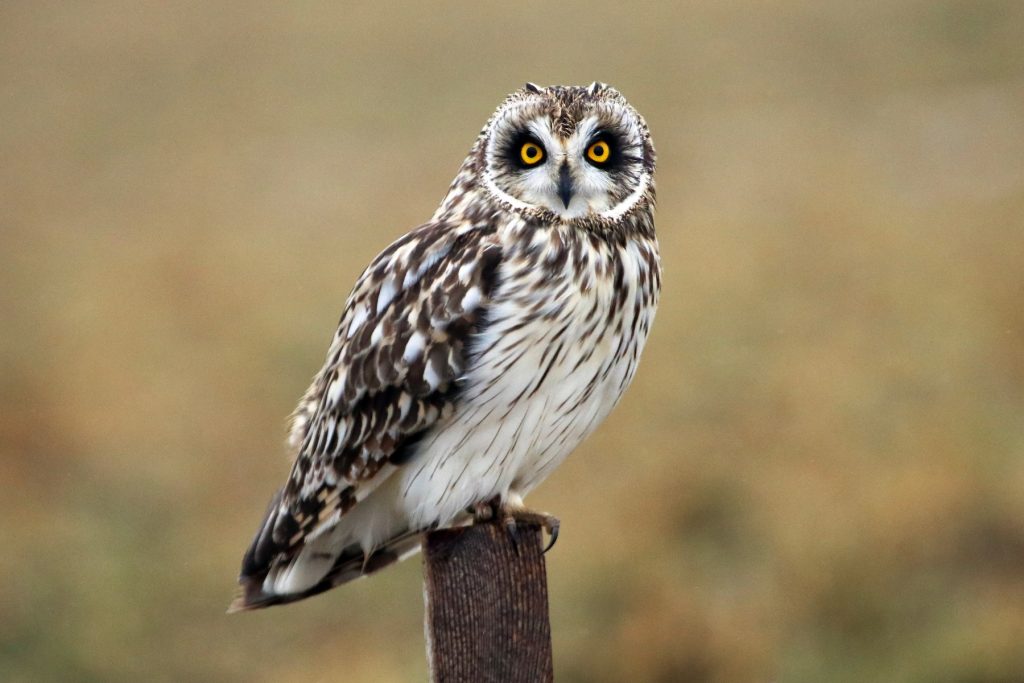
organisms. For example, the two wide-spread British owls were distinguished
centuries ago by vernacular binomials, the one as the Barn Owl, White Owl
or Church Owl, the other as the Brown Owl or Ivy Owl. Two thousand years
ago the Romans distinguished kinds of wheat as
triticum Africum, triticum
Alexandrinum, triticum Haeticum, etc. Linnaeus’s predecessors writing
in Latin, among them John Ray, used such two-word names for species as
Convolvulus
major together with longer names as
Convolvulus minor vulgaris
and
Convolvulus maritimus Soldanella dictus, the three British species
being known, however, in English as “Great Bindweed”, “Small Bindweed”
and “Sea Bindweed”. In 1753 Linnaeus provided these three species with
two-word scientific names,
Convolvulus sepium, Convolvulus arvensis
and
Convolvulus soldanella, in agreement with the simplicity, brevity
and convenience of their vernacular names. Linnaeus linked each of these
specific names for everyday use
(nomina trivialia) with a descriptive
name such as
Convolvulus foliis sagittatis utrinque acutis, pedunculis
unifloris and with references to earlier literature, notably Caspar
Bauhin’s
Pinax theatri botanici (1623), which helped to identify
the species concerned and limited the application of its two-word specific
name, in theory at any rate and generally also in practice, to that one
species. The general adoption by botanists and zoologists of this consistent
two-word nomenclature for species during the second half of the eighteenth
century came about because Linnaeus introduced it in comprehensive works
which naturalists soon found indispensable. These works were, however,
long in the making; their genesis, though not their nomenclature, goes
back to Linnaeus’s early years.
[1]
“This valuable collection of letters ought to be made public as it contains
many hundreds of letters, in which are treated anything extraordinary,
that occurred, from 1735 until his death is mentioned. It is a pity that
Linnaeus himself never took copies of his own letters, prevented from so
doing because of too much work.” Those are Linnaeus’s own words about his
correspondence.
Nobody but Linnaeus could have been more aware of the scientific value
of his own correspondence. The correspondents, according to himself, “were
the most learned and curious in Europe”, who informed Linnaeus of new discoveries
and sent him letters and books. In the third of his autobiographies from
the 1760’s he listed seventy-one correspondents from Russia and Turkey
in the east to America in the west.
In the years to come the number of letters and correspondents continued
to grow. When Linnaeus died in 1778 more than 170 Swedish and 400 foreign
correspondents had written to him. Over three thousands letters had been
sent to him from Europe, America, Asia and Africa by colleagues and also
by admirers such as Jean Jacques Rousseau and particularily by his own
students who reported to their professor from their travels all over the
world.
After Linnaeus’s death the correspondence, his manuscripts, the books
and the herbarium remained in the possession of the family. Linnaeus’s
son, Carl Linnaeus the Younger, who succeeded his father as professor in
botany at the University of Uppsala, added his own correspondence, books
and specimens to those of his father. Linnaeus the Younger died in 1783
leaving everything to his mother, Sara Lisa Moraea, Carl von Linné’s
widow, who needed money to provide dowries for her four daughters, decided
to sell the collections. As is well known to the fellows of the Linnaean
Society of London, being unable to find a Swedish buyer who could pay the
required 1000 guineas sterling, Linnaeus’s widow sold the Linnaean collections
in 1784 to the young English medical student and naturalist James Edward
Smith.
In 1829, after Smith’s death, the collections were transferred to the
Linnaean Society of London, which had been founded by Smith and other naturalists
in London in 1788. The Linnaean correspondence together with the rest of
Linnaeus’s manuscripts, the herbarium and the greater part of his library
still remain there.
Very little of his correspondence was published during his lifetime.
In Epistolarum ab eruditis viris ad Alb. Hallerum scriptarum pars 1
(Bern 1773) parts of the correspondence with Albrecht von Haller were printed.
James Edward Smith published a selection of the letters in 1821, in
two volumes, A selection of the correspondence of Linnaeus and other
naturalists from the original manuscripts (London 1821). From the 1820’s
and onwards other parts of the correspondence were edited separately. In
1829 the correspondence with Alexander Garden appeared, in 1830 the one
with Johannes and Nicolaus Laurentius Burman, in 1841 with Nicolaus Jacquin,
in 1851 with Bernard Jussieu, in 1860 with François Boissier de
Sauvages de la Croix, 1861 with Johann Georg Gmelin and in 1878-1880 265
letter to and from Swedes, etc. were published.
Towards the end of the nineteenth century the interest in Linnaeus became
even more intensive than it had been before. The image of Linnaeus as one
of the national heroes in Sweden became common. In 1885 the Swedish botanist,
Ewald Ährling, published the first printed catalogue of the Linnaean
correspondence. In the preface Ährling says “that even in Sweden it
had been commonly recognised that the correspondence of great men demands
special attention”. In 1878-1879 Ährling had taken the initiative
to publish Linnaeus’s correspondence with Swedes.
It was not until the first decade of the twentieth century the thought
of publishing the complete correspondence emerged again. In 1907, 200 years
after the birth of Linnaeus, it was announced by the Swedish Parliament
that the Linnaean letters were to be published in its entirety. Within
a period of 36 years about a fourth of the correspondence was published
in Bref och skrifvelser till och från Carl von Linné
(Stockholm & Uppsala 1907-1943). For different reasons the letters
ceased to come out after 1943.
Fifty years later a new initiative was taken by the Swedish Linnaean
Society to restart the publication of the Linnaean correspondence. In 1994
the Swedish National Bank through its research foundation agreed to support
the project financially. A collaboration between the Swedish Linnaean Society,
the Royal Swedish Academy of Sciences, Uppsala University and its library,
the Linnaean Society of London and the c18 programme of the Centre international
d’étude du XVIIIe siècle of Ferney-Voltaire will hopefully
lead to the realisation of Linnaeus’s wish “to make public” all the letters.
This time the correspondence will be published in an international edition.
All the documents will be published in their original form. The letters
written in Latin and in Swedish will be given a short summary in English.
Commentaries, biographies, etc. will also be in English.
The first phase of the publishing project started in the summer of 1995
and consists in listing and locating the letters to and from Linnaeus.
About 5,500 letters have been recorded to date but we expect to find many
more. A request for the letters from Linnaeus to his friends and colleagues
has been sent out to about 300 libraries all over the world. We are primarily
interested in locating such letters and of course, if it is possible, in
getting copies from them. We also know that many letters are preserved
for the future by interested collectors. If anyone of you, lucky enough
to own a manuscript or letter by Linnaeus, reads this, we should be very
glad to hear from you. We might be able to provide you with new information
about the autograph you own.
A selection of the letters is available for the users of the internet.
The letters have been chosen to illustrate different epochs and aspects
of Linnaeus’s life and work. The correspondents who come from different
countries are either well-known scientist or characters scarcely remembered
nowadays.
We should appreciate to know what you think about our project and our
way of editing the letters. Send an e-mail to Tomas
Anfält.
The correspondence will be published in electronic form, via the internet.
We hope to deliver the first twelve years of the Linnaean correspondence
(1728-1739) in 1998. Further information about the publication of the Linnaean
correspondence can be given by Tomas
Anfält, Uppsala University Library, Box 510, 75120 Uppsala, Sweden.
The first and chief objective of this edition is to provide complete and
authoritative texts of Linnaeus' correspondence. As far as possible the
letters are dated, arranged in chronological order and the senders and
recipients identified.
Where circumstances allow transcriptions have been made from the original
manuscripts. If the manuscript is inaccessible a photocopy or other facsimile
is reproduced. Drafts, secondary copies and printed sources have been used
when necessary.
The method of transcription employed is adapted to modern principles
and techniques of textual editing. Orthography, punctuation and grammar
of the original document is preserved so far as the criteria of legibility
permits. In cases where there are doubts about spelling, the use of capital
letters, punctuation or grammar, editorial corrections may be made. Square
brackets enclose conjectural readings and descriptions of any illegible
passages.
Where Linnaeus or his correspondents have made alterations in the text,
the ultimate version is reproduced and the original readings reproduced
in the textual notes.
Paragraphs in the original text are respected. If the author of the
letter has indicated the start of a new paragraph by leaving space in the
text, it is treated as a new paragraph by the editors.
Marginal additions are transcribed where the editors believe they were
intended to be read. The position of such additions is recorded in the
textual notes.
The hand-drawn illustrations that occur in the letters are reproduced
as faithfully as possible.
Punctuation marking the end of a clause or sentence is occasionally
missing in the original texts. In such cases punctuation is inserted without
comments by the editors.
Some of the Linnaean letters are known only from entries in catalogues
from book and manuscript dealers or references in other published sources.
Whatever information those sources provide is reproduced without change.
Every letter available to the editors is always given in full. In many
cases the Linnaean correspondence contains memoranda or other documents
relevant to the letters. These are summarised.
The format in which the texts are presented is as follows:
-
Order of letters. The letters are arranged in chronological order according
to the Gregorian calendar. A letter that can be dated only approximately
is placed at the earliest date on which the editors believe it could have
been written. Every letter is given a number relating to the year, month
and day it was written. If more than one letter was written on the same
day, they are arranged alphabetically according to the name of the author.
-
Heading. This gives the name of the sender and recipient of the letter,
the place from which it was written and its date.
-
The text. The transcribed text follows as closely as possible the layout
of the source although word spacing and line divisions in the running text
are not reproduced. Opening salutations and addresses are reproduced respectively
at the head and foot of the text. The address is run on as a single paragraph.
-
A short summary in English is provided of the letters which are written
in languages other than English, French or German. These summaries cover
only the principle content of the letters.
-
Source. The provenance of the texts is indicated under the headings 'Manuscripts'
and 'Editions'.
-
Annotation. Notes concerning the state of the texts appear under the heading
'Textual notes' and commentaries on the letters under the heading 'Notes'.
Some citations and references in the commentary are based on notes published
in Bref och skrifvelser[+]
and Svenska arbeten[+]
The source is not usually indicated in these cases.
-
Biographical and bibliographical information is provided by hypertext links
to separate files.