Allan Octavian HumeAllan Octavian Hume (June 6, 1829 - July 31, 1912) son of Joseph Hume was a civil servant in British governed India, and a political reformer. He was, along with Sir William Wedderburn, a founder of the Indian National Congress. He has been called the father of Indian Ornithology by some and, by those who found him dogmatic as the Pope of Indian ornithology.[1]
1 Life and career
2 Theosophy
3 Contribution to ornithology
3.1 Species described
3.2 Stray Feathers
3.3 Hume's network of correspondents
3.4 My Scrap book: or rough notes on Indian Oology and ornithology (1869)
3.5 Game Birds of India, Burmah and Ceylon (1879-1881)
3.6 Nests and Eggs of Indian Birds (1883)
4 Indian National Congress
5 South London Botanical Institute
6 See also
7 ReferencesLife and career
Hume was born at St Mary Cray, Kent,[2] the son of Joseph Hume, the Radical MP. He was educated at Haileybury Training College and then University College Hospital, studying medicine and surgery. In 1849 he sailed to India and the following year joined the Bengal Civil Service at Etawah in the North-Western Provinces, in what is now Uttar Pradesh. He soon rose to become District Officer, introducing free primary education and creating a local vernacular newspaper, Lokmitra (The People's Friend). He married Mary Anne Grindall in 1853.[3]During the uprising of 1857 Hume took refuge in the Agra fort for six months. Only one Indian official remained loyal and Hume took back position in January 1858. He built up a force of 650 Indian troops and took part in engagements with them. Hume blamed the British ineptitude for the uprising and pursued a policty of ‘mercy and forbearance’.[4]
He took up the cause of education and founded scholarships for higher education. He wrote in 1859:[3]
a free and civilized government must look for its stability and permanence to the enlightenment of the people and their moral and intellectual capacity to appreciate its blessings.
In 1860 Hume was made Companion of the Bath for his services during the rebellion or Indian rebellion of 1857.
The system of departmental examinations introduced soon after (Hume joined the civil services) enabled Hume so to outdistance his seniors that when the Mutiny broke out he was officiating Collector of Etawah, which lies between Agra and Cawnpur. Rebel troops were constantly passing through the district, and for a time it was necessary to abandon headquarters ; but both before and after the removal of the women and children to Agra, Hume acted with vigour and judgment. The steadfast loyalty of many native officials and landowners, and the people generally, was largely due to his influence, and enabled him to raise a local brigade of horse. In a daring attack on a body of rebels at Jaswantnagar he carried away the wounded joint magistrate, Mr. Clearmont Daniel, under a heavy fire, and many months later he engaged in a desperate action against Firoz Shah and his Oudh freebooters at Hurchandpur. Company rule had come to an end before the ravines of the Jumna and the Chambul in the district had been cleared of fugitive rebels. Hume richly merited the C.B. (Civil division) awarded him in 1860. He remained in charge of the district for ten years or so and did good work.
—Obituary The Times of August 1st, 1912
In 1863 he moved for separate schools for Juvenile delinquents rathern than imprisonment. His efforts led to a Juvenile Reformatory not far from Etawah. He also started free schools in Etawah and by 1857 he established 181 schools with 5186 students including two girls. In 1867 he became Commissioner of Customs for the North West Province, and in 1870 he became attached to the central government as Director-General of Agriculture. In 1879 he returned to provincial government at Allahabad.[3]Hume's appointment, in 1867, to be Commissioner of Customs in Upper India gave him charge of the huge physical barrier[5]which stretched across the country for 2,500 miles from Attock, on the Indus, to the confines of the Madras Presidency. He carried out the first negotiations with Rajputana Chiefs, leading to the abolition of this barrier, and Lord Mayo rewarded him with the Secretaryship to Government in the Home, and afterwards, from 1871, in the Revenue and Agricultural Departments. Leaving Simla, he returned to the North-West Provinces in October, 1879, as a member of the Board of Revenue, and retired from the service in 1882.[6]
He was against the revenue earned through liquor traffic and described it as "The wages of sin". With his progressive ideas about social reform, he advocated women's education, was against infanticide and enforced widowhood. Hume laid out in Etawah a neatly gridded commercial district that is now known as Humeganj but often pronounced Homeganj. The high school that he helped build with his own money is still in operation, now as a junior college, and it has a floor plan resembling the letter H. This, according to some is an indication of Hume's imperial ego, although the form can easily be missed.
Hume proposed to develop fuelwood plantations "in every village in the drier portions of the country" and thereby provide a substitute heating and cooking fuel so that manure could be returned to the land. Such plantations, he wrote, were "a thing that is entirely in accord with the traditions of the country-a thing that the people would understand, appreciate, and, with a little judicious pressure, cooperate in."
He also took note of rural indebtedness, chiefly caused by the use of land as security, a practice the British themselves had introduced. Hume denounced it as another of "the cruel blunders into which our narrow-minded, though wholly benevolent, desire to reproduce England in India has led us." Hume also wanted government-run banks, at least until cooperative banks could be established.[3]
He was very outspoken and never feared to criticise when he thought the Government was in the wrong. In 1861, he objected to the concentration of police and judicial functions in the hands of the police superintendent. He criticized the administration of Lord Lytton (before 1879) which according to him cared little for the welfare and aspiration of the people of India. Lord Lytton's foreign policy according to him had led to the waste of "millions and millions of Indian money".[3]
In 1879 the Government made their disapproval of his criticism and frankness known and summarily removed him from the Secretariat. The Englishman in an article dated 27 June 1879, commenting on the event stated, "There is no security or safety now for officers in Government employment."
Hume retired from the civil service in 1882. In 1883 he wrote an open letter to the graduates of Calcutta University, calling upon them to form their own national political movement. This led in 1885 to the first session of the Indian National Congress held in Bombay. Hume served as its General Secretary until 1908. Along with Sir William Wedderburn (1838-1918) they made it possible for Indians to organize themselves in preparation of self government.
Mary Anne Grindall died in 1890, and their only daughter was the widow of Mr. Ross Scott who was sometime Judicial Commissioner of Oudh. Hume left India in 1894 and settled at The Chalet, 4, Kingswood Road, Upper Norwood in London. He died at the age of eighty-three on July 31st, 1912. His ashes are buried in Brookwood Cemetery.
In 1973, the Indian postal department released a commemorative stamp.[7]
Theosophy
Hume did not have great regard for institutional Christianity, but believed in the immortality of the soul and in the idea of a supreme ultimate.[4] Hume wanted to become a chela (student) of the Tibetan spiritual gurus. During the few years of his connection with the Theosophical Society Hume wrote three articles on Fragments of Occult Truth under the pseudonym "H. X." published in The Theosophist. These were written in response to questions from Mr. Terry, an Australian Theosophist. He also privately printed several Theosophical pamphlets titled Hints on Esoteric Theosophy. The later numbers of the Fragments, in answer to the same enquirer, were written by A.P. Sinnett and signed by him, as authorized by Mahatma K. H., A Lay-Chela.A long story, about Hume and his wife appears in A.P. Sinnett's book Occult World, and the synopsis was published in a local paper of India. The story relates how at a dinner party, Madame Blavatsky asked Mrs Hume if there was anything she wanted. She replied that there was a brooch, her mother had given her, that had gone out of her possession some time ago. Blavatsky said she would try to recover it through occult means. After some interlude, later that evening, the brooch was found in a garden, where the party was directed by Blavatsky.
Madame Blavatsky was a regular visitor at Hume's Rothney castle at Simla and an account of her visit may be found in Simla, Past and Present by Edward John Buck (who succeeded Mr. Hume in charge of the Agricultural Department). Later, Hume privately expressed grave doubts on certain powers attributed to Madame Blavatsky and due to this, soon fell out of favour with the Theosophists.
Hume lost all interest in theosophy when he got involved with the creation of the Indian National Congress.
Contribution to ornithology
From early days, Hume had a special interest in science. Science, he wrote...teaches men to take an interest in things outside and beyond… The gratification of the animal instinct and the sordid and selfish cares of worldly advancement; it teaches a love of truth for its own sake and leads to a purely disinterested exercise of intellectual faculties
and of natural history he wrote in 1867:[3]
... alike to young and old, the study of Natural History in all its branches offers, next to religion, the most powerful safeguard against those worldly temptations to which all ages are exposed. There is no department of natural science the faithful study of which does not leave us with juster and loftier views of the greatness, goodness, and wisdom of the Creator, that does not leave us less selfish and less worldly, less spiritually choked up with those devil’s thorns, the love of dissipation, wealth, power, and place, that does not, in a word, leave us wiser, better and more useful to our fellow-men.
During his career in Etawah, he built a personal collection of bird specimens, however it was destroyed during the 1857 mutiny. Subsequently he started afresh with a systematic plan to survey and document the birds of the Indian Subcontinent and in the process he accumulated the largest collection of Asiatic birds in the world, which he housed in a museum and library at his home in Rothney Castle on Jakko Hill, Simla. Rothney castle originally belonged to P. Mitchell, C.I.E and after Hume bought it, he tried to convert the house into a veritable palace, which he expected would be bought by the Government as a Viceregal residence in view of the fact that the Governor-General then occupied Peterhoff, which was too small for Viceregal entertainments. Hume spent over two hundred thousand pounds on the grounds and buildings. He added enormous reception rooms suitable for large dinner parties and balls, as well as a magnificent conservatory and spacious hall with walls displaying his superb collection of Indian horns. He hired a European gardener, and made the grounds and conservatory a perpetual horticultural exhibition, to which he courteously admitted all visitors.[3]
Rothney Castle could only be reached by a troublesome climb, and was never purchased by the British Government and he himself did not use the larger rooms except for one that he converted into a museum for his wonderful collection of birds, and for occasional dances.[3]
He made many expeditions to collect birds both on health leaves and as and where his work took him. He was Collector and Magistrate of Etawah from 1856 to 1867 during which time he studied the birds of that area. He later became Commissioner of Inland Customs which made him responsible for the control of 2500 miles of coast from near Peshawar in the northwest to Cuttack on the Bay of Bengal. He travelled on horseback and camel in areas of Rajasthan and negotiated treaties with various local maharajas to control the export of natural resources such as salt. During these travels he made a number of notes on various bird species:
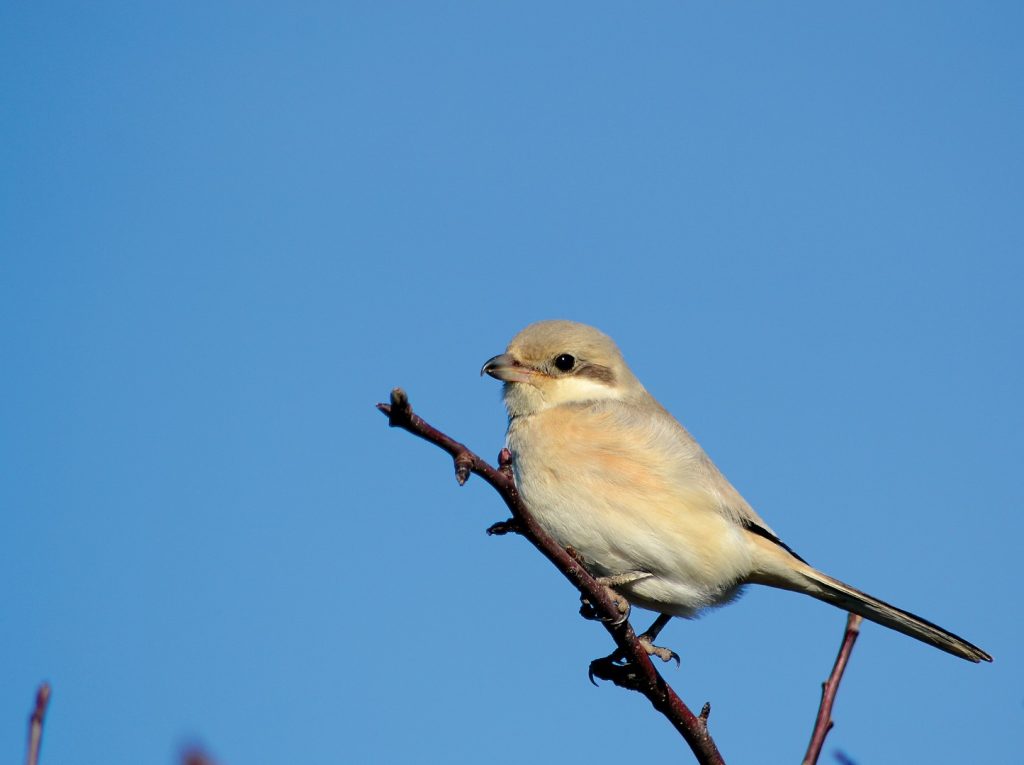
The nests are placed indifferently on all kinds of trees (I have notes of finding them on mango, plum, orange, tamarind, toon, etc.), never at any great elevation from the ground, and usually in small trees, be the kind chosen what it may. Sometimes a high hedgerow, such as our great Customs hedge, is chosen, and occasionally a solitary caper or stunted acacia-bush.
– On the nesting of the Bay-backed Shrike (Lanius vittatus) in The Nests and Eggs of Indian Birds.
His expedition to the Indus area was one of the largest and it started in late November 1871 and continued until the end of February 1872. In March 1873, he visited the Andaman and Nicobar Islands in the Bay of Bengal. In 1875 he visited the Laccadive Islands. And in 1881 he made his last ornithological expedition to Manipur. This was made on special leave following his demotion from the Central Government to a junior position on the Board of Revenue of the North Western Provinces.
He used this vast bird collection to produce a massive publication on all the birds of India. Unfortunately this work was lost in 1885 when all Hume's manuscripts were sold by a servant as waste paper. Hume's interest in ornithology reduced due to this theft as well as a landslip caused by heavy rains in Simla which damaged his personal museum and specimens. He wrote to the British Museum wishing to donate his collection on certain conditions. One of the conditions was that the collection was to be examined by Dr. R. Bowdler Sharpe and personally packed by him, apart from raising Dr. Sharpe's rank and salary due to the additional burden on his work caused by his collection. The British Museum was unable to heed to his conditions. It was only after the destruction of nearly 20000 specimens, that alarm bells were raised by Dr. Sharpe and the Museum authorities let him visit India to supervise the transfer of the specimens to the British Museum.[3]
Sharpe provides the following account of Hume's impressive private ornithological museum:[3]
I arrived at Rothney Castle about 10 am on the 19th of May, and was warmly welcomed by Mr Hume, who lives in a most picturesque situation high up on Jakko…From my bedroom window, I had a fine view of the snowy range. Although somewhat tired by my jolt in the Tonga from Solun, I gladly accompanied Mr. Hume at once into the museum…I had heard so much from my friends, who knew the collection intimately,…that I was not so much surprised when at last I stood in the celebrated museum and gazed at the dozens upon dozens of tin cases which filled the room. Before the landslip occurred, which carried away one end of the museum, It must have been an admirably arranged building, quite three times as large as our meeting-room at the Zoological Society, and…much more lofty. Throughout this large room went three rows of table cases with glass tops, in which were arranged a series of the birds of India sufficient for the identification of each species, while underneath these table- cases where enormous cabinets made of tin, with trays inside, containing species of birds in the table cases above. All of the rooms were racks reaching up to the ceiling, and containing immense cases full of birds… On the western side of the museum was the library, reached by a descent of three steps, a cheerful room, furnished with large tables, and containing besides the egg-cabinets, a well-chosen set of working-volumes. One ceases to wonder at the amount of work its owner got through when the excellent plan of his museum is considered. In a few minutes an immense series of specimens could be spread out on the tables, while all the books were at hand for immediate reference…After explaining to me the contents of the museum, we went below into the basement, which consisted of eight great rooms, six of them full, from floor to ceiling, of cases of birds, while at the back of the house two large verandahs were piled high with cases full of large birds, such as Pelicans, Cranes, Vultures, &c. An inspection of a great cabinet containing a further series of about 5000 eggs completed our survey. Mr. Hume gave me the keys of the museum, and I was free to commence my task at once.
Sharpe also noted:[3]
Mr. Hume was a naturalist of no ordinary calibre, and this great collection will remain a monument of his genius and energy of its founder long after he who formed it has passed away...Such a private collection as Mr. Hume's is not likely to be formed again; for it is doubtful if such a combination of genius for organisation with energy for the completion of so great a scheme, and the scientific knowledge requisite for its proper development will again be combined in a single individual.
The Hume collection as it went to the British museum in 1884 consisted of 82,000 specimens of which 75,577 were finally placed in the Museum. A breakup of that collection is as follows (old names retained).[3]
2830 Birds of Prey (Accipitriformes)… 8 types
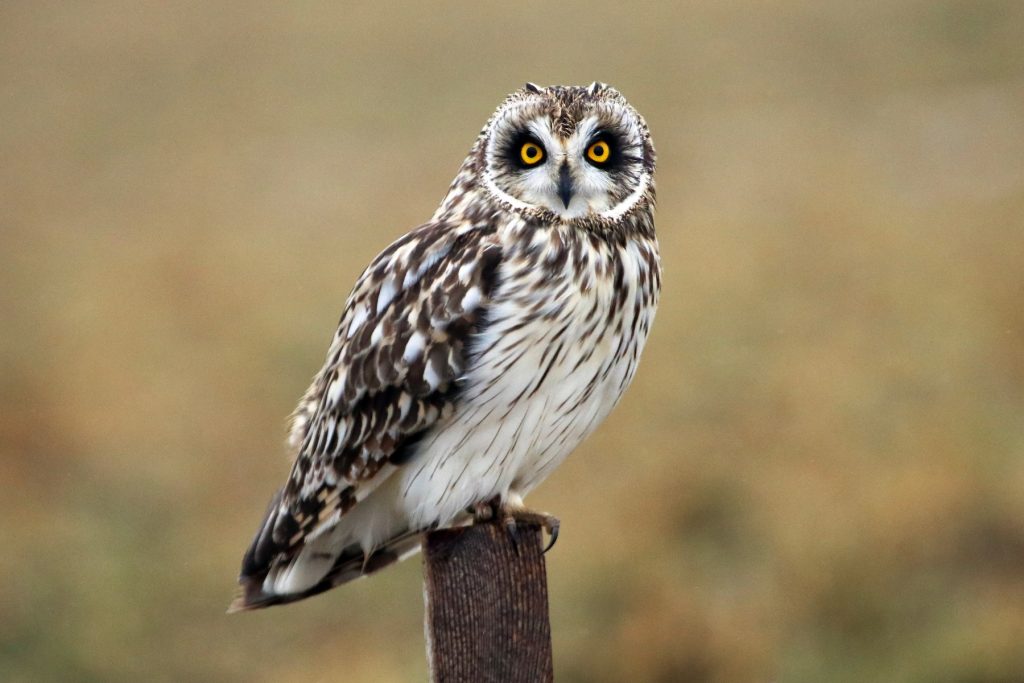
1155 Owls (Strigiformes)…9 types
2819 Crows, Jays, Orioles etc…5 types
4493 Cuckoo-shrikes and Flycatchers… 21 types
4670 Thrushes and Warblers…28 types
3100 Bulbuls and wrens, Dippers, etc…16 types
7304 Timaliine birds…30 types
2119 Tits and Shrikes…9 types
1789 Sun-birds (Nectarinidae) and White-eyes (Zosteropidae)…8 types
3724 Swallows (Hirundiniidae), Wagtails and Pipits (Motacillidae)…8 types
2375 Finches (Fringillidae)…8 types
3766 Starlings (Sturnidae), Weaver-birds (Ploceidae), and larks (Alaudidae)…22 types
807 Ant-thrushes (Pittidae), Broadbills (Eurylaimidae)…4 types
1110 Hoopoes (Upupae), Swifts (Cypseli), Nightjars (Caprimulgidae) and Frogmouths (Podargidae)…8 types
2277 Picidae, Hornbills (Bucerotes), Bee-eaters (Meropes), Kingfishers (Halcyones), Rollers(Coracidae), Trogons (Trogones)…11 types
2339 Woodpeckers (Pici)…3 types
2417 Honey-guides (Indicatores), Barbets (Capiformes), and Cuckoos (Coccyges)…8 types
813 Parrots (Psittaciformes)…3 types
1615 Pigeons (Columbiformes)…5 types
2120 Sand-grouse (Pterocletes), Game-birds and Megapodes(Galliformes)…8 types
882 Rails (Ralliformes), Cranes (Gruiformes), Bustards (Otides)…6 types
1089 Ibises (Ibididae), Herons (Ardeidae), Pelicans and Cormorants (Steganopodes), Grebes (Podicipediformes)…7 types
761 Geese and Ducks (Anseriformes)…2 types
15965 Eggs
The Hume Collection contained 258 types.The egg collection was made up of carefully authenticated contributions from knowledgeable contacts and on the authenticity and importance of the collection, E. W. Oates wrote in the 1901 Catalogue of the collection of birds' eggs in the British Museum (Volume 1):
The Hume Collection consists almost entirely of the eggs of Indian birds. Mr. Hume seldom or never purchased a specimen, and the large collection brought together by him in the course of many years was the result of the willing co-operation of numerous friends resident in India and Burma. Every specimen in the collection may be said to have been properly authenticated by a competent naturalist; and the history of most of the clutches has been carefully recorded in Mr. Hume's 'Nests and Eggs of Indian Birds', of which two editions have been published.
Species described
Some of the species that were first described or discovered by Hume are as follows. The numbers are references to species as given in S. D. Ripley's synopsis[8] and the old names are retained. Many of these names are no longer valid.[3]12 Persian Shearwater (Procellaria lherminieri persica) (Puffinus persicus)
17 Short-tailed Tropic-bird (Phaethon aethereus indicus)
33 Great Whitebellied Heron (Ardea insignis)
96 Grey, Andaman or Oceanic Teal (Anas gibberifrons albogularis)
140 Burmese Shikra (Accipiter badius poliopsis)
148 Indian Sparrow-hawk (Accipiter nisus melaschistos)
180,183 Indian Griffon Vulture (Gyps fulvus fulvescens)
181 Himalayan Griffon Vulture (Gyps himalayensis)
200 Andaman Pale Serpent Eagle (Spilornis cheela davisoni)
201 Nicobar Crested Serpent Eagle (Spilornis cheela minimus) (=Spilornis minimus)
235 Northern Chukor (Alectoris chukar pallescens)
239 Assam Black Partridge (Francolinus francolinus melanonotus)
263 Northern Painted Bush Quail (Perdicula erythrorhyncha blewitti)
265 Manipur Bush Quail (Perdicula manipurensis manipurensis)
273 Redbreasted Hill Partridge (Arborophila mandellii)
308 Mrs. Hume's Barredback Pheasant (Syrmaticus humiae humiae)
330 Andaman Bluebreasted Banded Rail (Rallus striatus obscurior)(= Gallirallus striatus)
466 Roseate Tern (Sterna dougalli korustes)
476 Blackshafted Ternlet (Sterna saundersi) (=Sterna albifrons)
516 Blue Rock Pigeon (Columba livia neglecta)
525 Andaman Wood Pigeon (Columba palumboides)
555 Andaman Redcheeked Parakeet (Psittacula longicauda tytleri)
563 Eastern Slatyheaded Parakeet (Psittacula finschii)
601 Bangladesh Crow-pheasant (Centropus sinensis intermedius)
607 Andaman Barn Owl (Tyto alba deroepstorffi)
610 Ceylon Bay Owl (Phodilus badius assimilis)
611 Western Spotted Scops Owl (Otus spilocephalus huttoni)
613 Andaman Scops Owl (Otus balli)
614 Pallid Scops Owl (Otus brucei)
618b Nicobar Scops Owl (Otus scops nicobaricus) (=Otus alius)
619 Punjab Collared Scops Owl (Otus bakkamoena plumipes)
626a Himalayan Horned or Eagle Owl (Bubo bubo hemachalana)
643 Burmese Brown Hawk-owl (Ninox scutulata burmanica)
645 Hume's Brown Hawk-owl (Ninox scutulata obscura)
653 Forest Spotted Owlet (Athene blewitti) (=Heteroglaux blewitti)
654 Hume's Owl (Strix butleri)
669 Bourdillon's or Kerala Great Eared Nightjar (Eurostopodis macrotis bourdilloni)
673 Hume's European Nightjar (Caprimulgus europaeus unwini)
679 Andaman Longtailed Nightjar (Caprimulgus macrurus andamanicus)
684 Hume's Swiftlet (Collocalia brevirostris innominata)
684a Black-nest Swiftlet (Collocalia maxima maxima)
686 Andaman Greyrumped or White-nest Swiftlet (Collocalia fuciphaga inexpectata)
691 Brown-throated Spinetail Swift (Chaetura gigantea indica)
732 Nicobar Storkbilled Kingfisher ([Pelargopsis capensis|Pelargopsis capensis intermedia]])
738 Andaman Whitebreasted Kingfisher (Halcyon smyrnensis saturatior)
773 Narcondam Hornbill (Rhyticeros undulatus narcondami)
793 Pakistan Orangerumped Honeyguide (Indicator xanthonotus radcliffi)
841 Manipur Crimsonbreasted Pied Woodpecker (Picoides cathpharius pyrrhothorax)
887 Karakoram or Hume's Short-toed Lark (Calandrella acutirostris acutirostris)
889 Indus Sand Lark (Calandrella raytal adamsi)
898 Baluchistan Crested Lark (Galerida cristata magna)
915 Pale Crag Martin (Hirundo obsoleta pallida)
974 Large Andaman Drongo (Dicrurus andamanensis dicruriformis)
986 Andaman Glossy Stare (Aplonis panayensis tytleri)
998 Hume's or Afghan Starling (Sturnus vulgaris nobilior)
1000 Sind Starling (Sturnus vulgaris minor)
1041 Hume's Ground Chough (Podoces humilis)
1113 Andaman Blackheaded Bulbul (Pycnonotus atriceps fuscoflavescens)
1165 Mishmi Brown Babbler (Pellorneum albiventre ignotum)
1172 Mount Abu Scimitar Babbler (Pomatorhinus schisticeps obscurus)
1190 Manipur Longbilled Scimitar Babbler (Pomatorhinus ochraceiceps austeni)
1225 Kerala Blackheaded Babbler (Rhopocichla atriceps bourdilloni)
1234 Hume's Babbler (Chrysomma altirostre griseogularis)
1289 Western Variegated Laughing Thrush (Garrulax variegatus similis)
1301 Khasi Hills Greysided Laughing Thrush (Garrulax caerulatus subcaerulatus)
1330 Manipur Redheaded Laughing Thrush (Garrulax erythrocephalus erythrolaema)
1363 Sikkim Whitebrowed Yuhina (Yuhina castaniceps rufigenis)
1389 Bombay Quaker Babbler (Alcippe poioicephala brucei)
1424 Eastern Slaty Blue Flycatcher (Muscicapa leucomelanura minuta)
1434 Whitetailed Blue Flycatcher (Muscicapa concreta cyanea)
1453 Eastern Whitebrowed Fantail Flycatcher (Rhipidura aureola burmanica)
1484 Hume's Bush Warbler (Cettia acanthizoides brunnescens)
1510 Northwestern Plain Wren-Warbler (Prinia subflava terricolor)
1520 Northwestern Jungle Wren-Warbler (Prinia sylvatica insignia)
1526 Sind Brown Hill Warbler (Prinia criniger striatula)
1540 Blacknecked Tailor Bird (Orthotomus atrogularis nitidus)
1569 Small Whitethroat (Sylvia curruca minula)
1570 Hume's Lesser Whitethroat (Sylvia curruca althaea)
1577 Plain Leaf Warbler (Phylloscopus neglectus)
1664 Andaman Magpie-Robin (Copsychus saularis andamanensis)
1707 Redtailed Chat (Oenanthe xanthoprymna kingi)
1714 Hume's Chat (Oenanthe alboniger)
1730 Burmese Whistling Thrush (Myiophonus caeruleus eugenei)
1820 Manipur Redheaded Tit (Aegithalos concinnus manipurensis)
1850 Manipur Tree Creeper (Certhia manipurensis)
1903 Andaman Flowerpecker (Dicaeum concolor virescens)
1913 Andaman Olivebacked Sunbird (Nectarinia jugularis andamanica)
1918 Assam Purple Sunbird (Nectarinia asiatica intermedia)
1129a Nicobar Yellowbacked Sunbird (Aethopyga siparaja nicobarica)
1955 Blanford's Snow Finch (Montifringilla blanfordi blanfordi)
1960 Finn's Baya (Ploceus megarhynchus megarhynchus)
1970 Nicobar Whitebacked Munia (Lonchura striata semistriata)
1971-2 Jerdon's Rufousbellied Munia (Lonchura kelaarti jerdoni)
1993 Tibetan Siskin (Carduelis thibetana)
1995 Stoliczka's Twite (Acanthis flavirostris montanella)William Ruxton Davison, Curator of Hume's personal bird collectionAn additional species, the Large-billed Reed-Warbler Acrocephalus orinus was known from just one specimen collected by him in 1869.[9] The status of the species was contested for long and DNA comparisons with similar species in 2002 suggested that it was a valid species.[10] It was only in 2006 that the species was seen again in Thailand.
Hume made several expeditions solely to study ornithology and in March 1873 he made one to the Andaman, Nicobar and other islands in the Bay of Bengal along with geologists Dr. Ferdinand Stoliczka and Dr. Dougall of the Geological Survey of India and James Wood-Mason of the Indian Museum in Calcutta.[3]
Hume employed William Ruxton Davison as a curator of his personal bird collection and also sent him out on collection trips to various parts of India, when he was held up with official responsibilities.[3]
Stray Feathers
Hume started the quarterly journal Stray Feathers - A journal of ornithology for India and dependencies in 1872. He used the journal to publish descriptions of his new discoveries, such as Hume's Owl, Hume's Wheatear and Hume's Whitethroat. He wrote extensively on his own observation as well as critical reviews of all the ornithological works of the time and earned himself the nickname of Pope of Indian ornithology.
Hume's network of correspondents
Hume built up a network of ornithologists reporting from various parts of India. A list based on the correspondents mentioned in Stray Feathers and in his Game Birds is as follows. This is probably only a small fraction of the subscribers of Stray Feathers. This huge network made it possible for Hume to cover a much larger geographic region in his ornithological work.
Distribution and density of Hume's correspondents across IndiaDuring the time of Hume, Blyth was considered the father of Indian ornithology. Hume's achievement which made use of a large network of correspondents was recognized even during his time:
Mr. Blyth, who is rightly called the Father of Indian Ornithology, "was by far the most important contributor to our knowledge of the Birds of India." Seated, as the head of the Asiatic Society's Museum, he, by intercourse and through correspondents, not only formed a large collection for the Society, but also enriched the pages of the Society's Journal with the results of his study, and thus did more for the extension of the study of the Avifauna of India than all previous writers. There can be no work on Indian Ornithology without reference to his voluminous contributions. The most recent authority, however, is Mr. Allen O. Hume, C.B., who, like Blyth and Jerdon, got around him numerous workers, and did so much for Ornithology, that without his Journal Stray Feathers, no accurate knowledge could be gained of the distribution of Indian birds. His large museum, so liberally made over to the nation, is ample evidence of his zeal and the purpose to which he worked. Ever saddled with his official work, he yet found time for carrying out a most noble object. His Nests and Eggs, Scrap Book and numerous articles on birds of various parts of India, the Andamans and the Malay Peninsula, are standing monuments of his fame throughout the length and breadth of the civilized world. His writings and the field notes of his curator, contributors and collectors are the pith of every book on Indian Birds, and his vast collection is the ground upon which all Indian Naturalists must work. Though differing from him on some points, yet the palm is his as an authority above the rest in regard to the Ornis of India. Amongst the hundred and one contributors to the Science in the pages of Stray Feathers, there are some who may be ranked as specialists in this department, and their labors need a record. These are Mr. W. T. Blanford, late of the Geological Survey, an ever watchful and zealous Naturalist of some eminence. Mr. Theobald, also of the Geological Survey, Mr. Ball of the same Department, and Mr. W. E. Brooks. All these worked in Northern India, while for work in the Western portion must stand the names of Major Butler, of the 66th Regiment, Mr. W. F. Sinclair, Collector of Colaba, Mr. G. Vidal, the Collector of Bombay, Mr. J. Davidson, Collector of Khandeish, and Mr. Fairbank, each one having respectively worked the Avifauna of Sind, the Concan, the Deccan and Khandeish.
—James Murray[11]
Many of Hume's correspondents were eminent naturalists and sportsmen of the time.Leith Adams, Kashmir
Lieut. H. E. Barnes, Afghanistan, Chaman, Rajpootana
Captain R. C. Beavan, Maunbhoom District, Shimla, Mount Tongloo (1862)
Colonel John Biddulph, Gilgit
Major C. T. Bingham, Thoungyeen Valley, Burma, Tenasserim, Moulmein, Allahabad
Mr. W. Blanford
Mr. Edward Blyth
Mr. W. Edwin Brooks
Sir Edward Charles Buck, Gowra, Hatu, near Narkanda (in Himachal Pradesh), Narkanda, (about 30 miles north of Shimla)
Captain Boughey Burgess, Ahmednagar (?-1855)[12]
Captain and then Colonel E. A. Butler, Belgaum (1880), Karachi, Deesa, Abu
Mr. James Davidson, Satara and Sholapur districts,Khandeish, Kondabhari Ghat
Colonel Godwin-Austen, Shillong, Umian valley, Assam
Mr. Brian Hodgson, Nepal
Duncan Charles Home, 'Hero of the Kashmir Gate' (Bulandshahr, Aligarh)
Dr. T. C. Jerdon, Tellicherry
Colonel C. H. T. Marshall, Bhawulpoor, Murree
Colonel G. F. L. Marshall, Nainital, Bhim tal
Mr. James A. Murray, Karachi Museum
Mr. Eugene Oates, Thayetmo, Tounghoo, Pegu
Captain Robert George Wardlaw Ramsay, Afghanistan, Karenee hills
Mr. G. P. Sanderson (Chittagong)
Dr. Ferdinand Stoliczka
Mr. Robert Swinhoe, Hongkong
Mr. Charles Swinhoe, S. Afghanistan
Colonel Samuel Tickell
Colonel Tytler, Dacca, 1852
Mr. Valentine Ball, Rajmahal hills, Subanrika (Subansiri)
Richard Lydekker
He also corresponded with ornithologists outside India including R. Bowdler-Sharpe, the Marquis of Tweeddale, Pere David, Dresser, Benedykt Dybowski, John Henry Gurney, J.H.Gurney, Jr. ,Johann Friedrich Naumann, Severtzov, Dr. Middendorff.
My Scrap book: or rough notes on Indian Oology and ornithology (1869)
This was Hume's first major work. It had 422 pages and accounts of 81 species. It was dedicated to Edward Blyth and Dr. Thomas C. Jerdon who had done more for Indian Ornithology than all other modern observers put together and he described himself as their their friend and pupil. He hoped that his book would form a nucleus round which future observation may crystallize and that others around the country could help him fill in many of the woeful blanks remaining in record.
Game Birds of India, Burmah and Ceylon (1879-1881)
This work was co-authored by C. H. T. Marshall. The three volume work on the game birds was made using contributions and notes from a network of 200 or more correspondents. Hume delegated the task of getting the plates made to Marshall. The chromolithographs of the birds were drawn by W. Foster, E. Neale, M. Herbert, Stanley Wilson and others and the plates were produced by F. Waller in London. Hume had sent specific notes on colours of soft parts and instructions to the artists. He was unsatisfied with many of the plates and included additional notes on the plates in the book.In the preface Hume wrote
In the second place, we have had great disappointment in artists. Some have proved careless, some have subordinated accuracy of delineation to pictorial effect, and though we have, at some loss, rejected many, we have yet been compelled to retain some plates which are far from satisfactory to us.
while his co-author Marshall, wrote
I have performed my portion of the work to the very best of my abilities, and yet personally felt almost as if I were sailing under false colors in appearing before the world as one of the authors of this book; but I allow my name to appear as such, partly because Mr. Hume strongly wishes it, partly because I do believe that as Mr. Hume says this work, which has been for years called for, would never have appeared had I not proceeded to England, and arranged for the preparation of the plates, and partly because with the explanation thus afforded no one can justly misconstrue my action.
Hume's comment on the illustration The plate is a cruel caricature of the species, just sufficiently like to permit of identification, but miscolored to a degree only explicable on the hypothesis of somebody's colour-blindness… Fortunately for our supporters, this is the very worst plate in the three volumes.
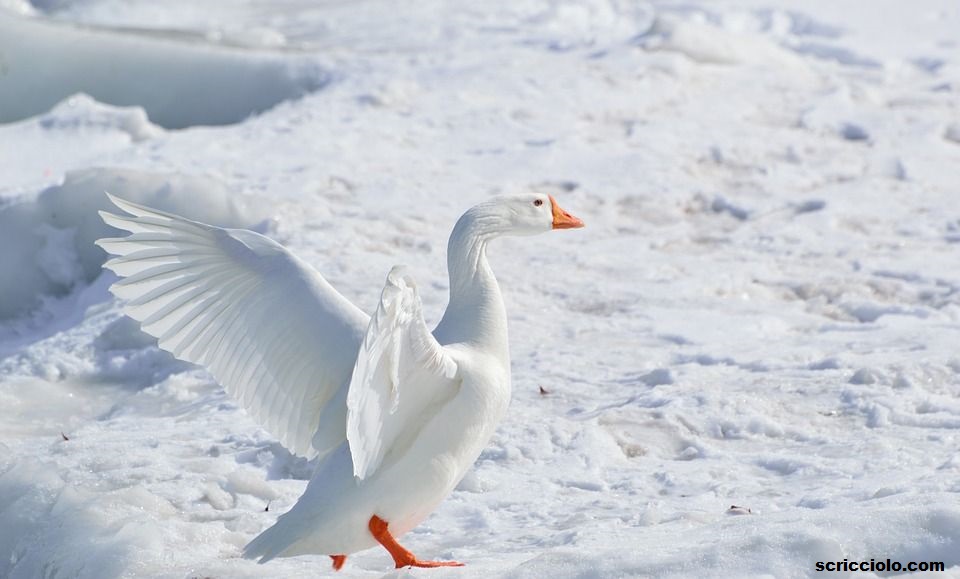
White-fronted Goose One of the illustrations that Hume considered as exceptionally good.
[edit] Nests and Eggs of Indian Birds (1883)
This was another major work by Hume and in it he covered descriptions of the nests, eggs and the breeding seasons of most Indian bird species. It makes use of notes from contributors to his journals as well as other correspondents and works of the time.A second edition of this book was made in 1889 which was edited by Eugene Oates. This was published when he had himself given up all interest in ornithology. An event precipitated by the loss of his manuscripts through the actions of a servant. He wrote in the preface:
I have long regretted my inability to issue a revised edition of 'Nests and Eggs'. For many years after the first Rough Draft appeared, I went on laboriously accumulating materials for a re-issue, but subsequently circumstances prevented my undertaking the work. Now, fortunately, my friend Mr. Eugene Oates has taken the matter up, and much as I may personally regret having to hand over to another a task, the performance of which I should so much have enjoyed, it is some consolation to feel that the readers, at any rate, of this work will have no cause for regret, but rather of rejoicing that the work has passed into younger and stronger hands.
One thing seems necessary to explain. The present Edition does not include quite all the materials I had accumulated for this work. Many years ago, during my absence from Simla, a servant broke into my museum and stole thence several cwts. of manuscript, which he sold as waste paper. This manuscript included more or less complete life-histories of some 700 species of birds, and also a certain number of detailed accounts of nidification. All small notes on slips of paper were left, but almost every article written on full-sized foolscap sheets was abstracted. It was not for many months that the theft was discovered, and then very little of the MSS. could be recovered.
—Rothney Castle, Simla, October 19th, 1889
Eugene Oates wrote his own editorial noteMr. Hume has sufficiently explained the circumstances under which this edition of his popular work has been brought about. I have merely to add that, as I was engaged on a work on the Birds of India, I thought it would be easier for me than for anyone else to assist Mr. Hume. I was also in England, and knew that my labour would be very much lightened by passing the work through the press in this country. Another reason, perhaps the most important, was the fear that, as Mr. Hume had given up entirely and absolutely the study of birds, the valuable material he had taken such pains to accumulate for this edition might be irretrievably lost or further injured by lapse of time unless early steps were taken to utilize it.
This nearly marked the end of Hume's interest in ornithology. Hume's last piece of ornithological writing was done in 1891 as part of an Introduction to the Scientific Results of the Second Yarkand Mission an official publication on the contributions of Dr. Ferdinand Stoliczka, who died during the return journey on this mission. Stoliczka in a dying request had asked that Hume should edit the volume on the ornithological results.
Indian National Congress
Main article: Indian National Congress
After retiring from the civil services and towards the end of Lord Lytton's rule, Hume sensed that the people of India had got a sense of hopelessness and wanted to do something, "a sudden violent outbreak of sporadic crime, murders of obnoxious persons, robbery of bankers and looting of bazaars, acts really of lawlessness which by a due coalescence of forces might any day develop into a National Revolt." There were agrarian riots in the Deccan and Bombay and Hume decided that an Indian Union would be a good safety valve and outlet for this unrest. On the 1st of March 1883 he wrote a letter to the graduates of Calcutta University:[13]If only fifty men, good and true, can be found to join as founders, the thing can be established and the further development will be comparatively easy. ...
And if even the leaders of thought are all either such poor creatures, or so selfishly wedded to personal concerns that they dare not strike a blow for their country's sake, then justly and rightly are they kept down and trampled on, for they deserve nothing better. Every nation secures precisely as good a Government as it merits. If you the picked men, the most highly educated of the nation, cannot, scorning personal ease and selfish objects, make a resolute struggle to secure greater freedom for yourselves and your country, a more impartial administration, a larger share in the management of your own affairs, then we, your friends, are wrong and our adversaries right, then are Lord Ripon's noble aspirations for your good fruitless and visionary, then, at present at any rate all hopes of progress are at an end and India truly neither desires nor deserves any better Government than she enjoys. Only, if this -be so, let us hear no more factious, peevish complaints that you are kept in leading strings and treated like children, for you will have proved yourself such. Men know how to act. Let there be no more complaining of Englishmen being preferred to you in all important offices, for if you lack that public spirit, that highest form of altruistic devotion that leads men to subordinate private ease to the public, weal that patriotism that has made Englishmen what they are,- then rightly are these preferred to you, rightly and inevitably have they become your rulers. And rulers and task-masters they must continue, let the yoke gall your shoulders never so sorely, until you realise and stand prepared to act upon the eternal truth that self-sacrifice and unselfishness are the only unfailing guides to freedom and happiness.The idea of the Indian Union took shape and Hume also had support from Lord Dufferin for this although the latter wished to keep a low profile in the matter. It has been suggested that the idea was originally conceived in a private meeting of seventeen men after a Theosophical Convention held at Madras in December 1884. Hume took the initiative, and it was in March 1885, when the first notice was issued convening the first Indian National Union to meet at Poona the following December.[13]
South London Botanical Institute
Main article: South London Botanical Institute
Shortly after Hume's return to London he took up an interest in botany, and founded and endowed the South London Botanical Institute which continues to promote the study of plants to the present day. It was intended as a sort of local alternative to Kew. The SLBI has a herbarium containing approximately 100,000 specimens mostly of flowering plants from the British Isles and Europe including many collected by Hume. The collection was later augmented by the addition of other herbaria over the years, and has significant collections of Rubus (bramble) species and of the Shetland flora, the latter including a major gift from the late Richard Palmer, joint author of the standard work on Shetland plants. Other resources include a very good library originally containing Hume's own books. The institute today has classroom facilities, a small botanical garden, and an ongoing programme of talks and courses. In the years leading up to the establishment of the Institute, Hume built up links with many of the leading botanists of his day. He worked with F. H. Davey and in the Flora of Cornwall (1909), Davey thanks Hume as his companion on excursions in Cornwall and Devon, and for helping in the compilation of that Flora, publication of which was financed by him.References
^ Ali, S. (1979) Bird study in India:Its history and its importance. Azad Memorial lecture for 1978. Indian Council for Cultural Relations. New Delhi.
^ According to the Dictionary of National Biography however Encyclopaedia Britannica [1] gives his birthplace as Montrose, Forfarshire
^ a b c d e f g h i j k l m n o Moulton, Edward (2003) 'The Contributions of Allan O. Hume to the Scientific Advancement of Indian Ornithology' in Petronia: Fifty Years of Post-Independence Ornithology in India, ed. J. C. Daniel and G. W. Ugra. Bombay Natural History Society - New Delhi: Oxford University Press, New Delhi. Pages 295-317.
^ a b Moulton, Edward C. 2004. ‘Hume, Allan Octavian (1829–1912)’, Oxford Dictionary of National Biography, Oxford University Press, 2004 accessed 6 Sept 2007
^ Footnote in Lydekker, 1913: This was a thorn-hedge supplemented by walls and ditches, and strongly patrolled for preventing the introduction into British territory of untaxed salt from native states(see Sir John Strachey's "India," London, 1888).
^ Lydekker, R. (1913) Catalogue of the Heads and Horns of Indian Big Game bequeathed by A. O. Hume, C. B., to the British Museum. Scanned version
^ Stamp commemorating Hume - Indian Postal Department
^ S. Dillon Ripley (1961) A Synopsis of the Birds of India and Pakistan. Bombay Natural History Society.
^ Hume, A. 1869. Ibis 2 (5): 355–357 (no title).
^ Bensch, S and D. Pearson (2002) The Large-billed Reed Warbler Acrocephalus orinus revisited. Ibis (2002), 144:259–267 PDF Nucleotide sequence
^ Murray, James A. 1888. The avifauna of British India and its dependencies. Truebner. Volume 1.
^ Warr, F. E. 1996. Manuscripts and Drawings in the ornithology and Rothschild libraries of The Natural History Museum at Tring. BOC.
^ a b Sitaramayya, B. Pattabhi. 1935. The History of the Indian National Congress. Working Committee of the Congress.
Allan Octavian HumeAllan Octavian Hume (6 giugno 1829 - 31 luglio 1912) figlio di Giuseppe Hume è stato un funzionario in inglese disciplinato l'India, e di una politica riformatrice. He was, along with Sir William Wedderburn, a founder of the Indian National Congress . E 'stato, insieme a Sir William Wedderburn, fondatore del Congresso Nazionale Indiano. He has been called the father of Indian Ornithology by some and, by those who found him dogmatic as the Pope of Indian ornithology . [1] Egli è stato chiamato il padre di Ornitologia indiana da parte di alcuni e, per coloro che hanno trovato dogmatica come il Papa indiana di ornitologia. [1]
1 Life and career 1 Vita e carriera
2 Theosophy 2 teosofia
3 Contribution to ornithology 3 Contributo di ornitologia
3.1 Species described 3,1 Specie descritte
3.2 Stray Feathers 3,2 Stray Piume
3.3 Hume's network of correspondents 3,3 Hume la rete di corrispondenti
3.4 My Scrap book: or rough notes on Indian Oology and ornithology (1869) 3,4 Mio Rottami libro: grezzi o note indiano Oology e ornitologia (1869)
3.5 Game Birds of India, Burmah and Ceylon (1879-1881) 3,5 Gioco Uccelli di India, Burmah e Ceylon (1879-1881)
3.6 Nests and Eggs of Indian Birds (1883) 3,6 Nidi e Uova di Indiano Uccelli (1883)
4 Indian National Congress 4 del Congresso Nazionale Indiano
5 South London Botanical Institute 5 South London Botanical Institute
6 See also 6 Vedi anche
7 References 7 Riferimenti
8 Further reading 8 Ulteriori letture
9 External links 9 Collegamenti esterniLa vita e la carriera
Hume was born at St Mary Cray , Kent , [2] the son of Joseph Hume , the Radical MP. Hume è nato a St Mary Cray, Kent, [2], il figlio di Giuseppe Hume, il deputato radicale. He was educated at Haileybury Training College and then University College Hospital , studying medicine and surgery . Ha studiato a Haileybury Training College e poi University College Hospital, lo studio di medicina e chirurgia. In 1849 he sailed to India and the following year joined the Bengal Civil Service at Etawah in the North-Western Provinces, in what is now Uttar Pradesh . Nel 1849 ha navigato per l'India e l'anno successivo ha aderito il Servizio Civile Bengala a Etawah nel nord occidentale Province, in quello che è ora Pradesh. He soon rose to become District Officer, introducing free primary education and creating a local vernacular newspaper, Lokmitra ( The People's Friend ). Egli è salito a diventare presto District Officer, introducendo libera istruzione primaria e la creazione di un giornale locale volgare, Lokmitra (L'Amico del Popolo). He married Mary Anne Grindall in 1853. [3] Si sposò con Mary Anne Grindall nel 1853. [3]During the uprising of 1857 Hume took refuge in the Agra fort for six months. Durante la sollevazione del 1857 Hume ha preso rifugio nel forte di Agra per un periodo di sei mesi. Only one Indian official remained loyal and Hume took back position in January 1858. Solo uno è rimasto fedele ufficiale indiano e Hume ha preso posizione indietro nel gennaio 1858. He built up a force of 650 Indian troops and took part in engagements with them. Egli ha costruito una forza di 650 indiano truppe e ha preso parte a impegni con loro. Hume blamed the British ineptitude for the uprising and pursued a policty of ‘mercy and forbearance’. [4] Hume accusato la British inettitudine per la sollevazione e perseguito una policty di "misericordia e la tolleranza". [4]
He took up the cause of education and founded scholarships for higher education. Egli ha assunto la causa di istruzione e la fondazione di borse di studio per l'istruzione superiore. He wrote in 1859: [3] Egli ha scritto nel 1859: [3]
a free and civilized government must look for its stability and permanence to the enlightenment of the people and their moral and intellectual capacity to appreciate its blessings. Un libero e civile governo deve guardare per la sua stabilità e la permanenza per l'illuminazione delle persone e la loro morale e intellettuale, la capacità di apprezzare le sue benedizioni.In 1860 Hume was made Companion of the Bath for his services during the rebellion or Indian rebellion of 1857 . Nel 1860 Hume è stato fatto il compagno di Bath per i suoi servizi durante la ribellione o indiano ribellione di 1857.
The system of departmental examinations introduced soon after ( Hume joined the civil services ) enabled Hume so to outdistance his seniors that when the Mutiny broke out he was officiating Collector of Etawah, which lies between Agra and Cawnpur. Il sistema di esami dipartimentale introdotto subito dopo (Hume aderito al servizio civile) Hume così abilitato a outdistance sua anziani che, quando sono scoppiati i Mutiny era officiante collettore di Etawah, che si trova tra Agra e Cawnpur. Rebel troops were constantly passing through the district, and for a time it was necessary to abandon headquarters ; but both before and after the removal of the women and children to Agra, Hume acted with vigour and judgment. Truppe ribelli sono stati costantemente passando per il distretto, e per una volta, è stato necessario abbandonare la sede; Ma sia prima che dopo la rimozione delle donne e dei bambini di Agra, Hume ha agito con fermezza e della sentenza. The steadfast loyalty of many native officials and landowners, and the people generally, was largely due to his influence, and enabled him to raise a local brigade of horse. L'incrollabile fedeltà nativo di molti funzionari e proprietari terrieri, e la gente in generale, è stato in gran parte dovuto alla sua influenza, e gli ha permesso di sollevare un locale brigata di cavallo. In a daring attack on a body of rebels at Jaswantnagar he carried away the wounded joint magistrate, Mr. Clearmont Daniel, under a heavy fire, and many months later he engaged in a desperate action against Firoz Shah and his Oudh freebooters at Hurchandpur. In un audace attacco di un corpo di ribelli a Jaswantnagar ha portato via i feriti congiunta magistrato, il signor Daniel Clearmont, sotto un pesante fuoco, e molti mesi più tardi egli si impegnò in una disperata azione contro Firoz Shah e la sua Oudh freebooters a Hurchandpur. Company rule had come to an end before the ravines of the Jumna and the Chambul in the district had been cleared of fugitive rebels. Azienda regola era giunto a scadenza prima della anfratti del Jumna e la Chambul nel distretto erano stati cancellati dei ribelli in fuga. Hume richly merited the C.B. (Civil division) awarded him in 1860. Hume pienamente meritato il CB (divisione civile), rilasciato in 1860. He remained in charge of the district for ten years or so and did good work. Egli rimane in carica del distretto per dieci anni o più e ha fatto un buon lavoro.
— Obituary The Times of August 1st, 1912 - Obituary The Times del 1 agosto 1912
In 1863 he moved for separate schools for Juvenile delinquents rathern than imprisonment. Nel 1863 si è trasferito per separare le scuole per i minorenni delinquenti rathern di reclusione. His efforts led to a Juvenile Reformatory not far from Etawah . I suoi sforzi hanno portato ad un minorenne Reformatory non lontano da Etawah. He also started free schools in Etawah and by 1857 he established 181 schools with 5186 students including two girls. Egli ha anche iniziato libera scuole in Etawah e dal 1857 ha istituito 181 scuole, con 5186 studenti di cui due ragazze. In 1867 he became Commissioner of Customs for the North West Province, and in 1870 he became attached to the central government as Director-General of Agriculture. Nel 1867 divenne Commissario delle dogane per la North West Province, e nel 1870 si è collegata al governo centrale di direttore generale dell 'Agricoltura. In 1879 he returned to provincial government at Allahabad . [3] Nel 1879 è tornato al governo provinciale a Allahabad. [3]Hume's appointment, in 1867, to be Commissioner of Customs in Upper India gave him charge of the huge physical barrier [5] which stretched across the country for 2,500 miles from Attock, on the Indus, to the confines of the Madras Presidency. Hume la nomina, nel 1867, ad essere Commissario delle dogane a Upper l'India ha dato l'enorme carico di barriera fisica [5], che si estendeva in tutto il paese per il 2500 miglia da Attock, sulla Indus, per i confini della presidenza di Madras. He carried out the first negotiations with Rajputana Chiefs, leading to the abolition of this barrier, and Lord Mayo rewarded him with the Secretaryship to Government in the Home, and afterwards, from 1871, in the Revenue and Agricultural Departments. Ha svolto la prima negoziati con Capi di Rajputana, che porta alla soppressione di questa barriera, e Lord Mayo lui premiato con la segreteria di governo nella Home, e poi, dal 1871, nel conto delle entrate e agricolo Dipartimenti. Leaving Simla, he returned to the North-West Provinces in October, 1879, as a member of the Board of Revenue, and retired from the service in 1882. [6] Lasciando Simla, tornava nel Nord-Ovest Province in ottobre, 1879, in qualità di membro del consiglio di amministrazione di entrate, e ritirato dal servizio nel 1882. [6]
He was against the revenue earned through liquor traffic and described it as "The wages of sin". Era contro la entrate ottenute attraverso liquore traffico e lo descrisse come "Il salario del peccato". With his progressive ideas about social reform, he advocated women's education, was against infanticide and enforced widowhood. Con la sua progressiva idee sulla riforma sociale, ha sostenuto l'istruzione delle donne, è stata applicata contro l'infanticidio e di vedovanza. Hume laid out in Etawah a neatly gridded commercial district that is now known as Humeganj but often pronounced Homeganj . Hume enunciati nella Etawah uno ordinatamente gridded quartiere commerciale, che è ormai noto come Humeganj ma spesso pronunciata Homeganj. The high school that he helped build with his own money is still in operation, now as a junior college, and it has a floor plan resembling the letter H. This, according to some is an indication of Hume's imperial ego, although the form can easily be missed. L'alta scuola, che ha contribuito a costruire con il proprio denaro è ancora in funzione, ora come junior college e ha una pianta che assomiglia alla lettera H. Questa, secondo alcuni è un'indicazione di Hume imperiali io, anche se il modulo può Facilmente perdere.
Hume proposed to develop fuelwood plantations "in every village in the drier portions of the country" and thereby provide a substitute heating and cooking fuel so that manure could be returned to the land. Hume propone di sviluppare le piantagioni di legna da ardere "in ogni villaggio in secca porzioni del paese" e quindi fornire un sostituto di riscaldamento e la cottura in modo che il letame di combustibile potrebbe essere restituito alla terra. Such plantations, he wrote, were "a thing that is entirely in accord with the traditions of the country-a thing that the people would understand, appreciate, and, with a little judicious pressure, cooperate in." Tali piantagioni, scrisse, erano "una cosa che è del tutto in sintonia con le tradizioni del paese - una cosa che la gente dovrebbe capire, apprezzare, e, con un po 'di pressione giudizioso, cooperare poll"
He also took note of rural indebtedness, chiefly caused by the use of land as security, a practice the British themselves had introduced. Egli ha inoltre preso atto delle zone rurali indebitamento, causato principalmente mediante l'uso di terreni, come la sicurezza, una pratica il British stessi avevano introdotto. Hume denounced it as another of "the cruel blunders into which our narrow-minded, though wholly benevolent, desire to reproduce England in India has led us." Hume denunciato come un altro di "crudele errori in cui il nostro gretto, anche se del tutto benevola, il desiderio di riprodurre l'Inghilterra in India ha portato a noi." Hume also wanted government-run banks, at least until cooperative banks could be established. [3] Hume anche voluto dal governo eseguire le banche, almeno fino banche cooperative potrebbero essere istituiti. [3]
He was very outspoken and never feared to criticise when he thought the Government was in the wrong. Era molto espliciti e mai temuto di criticare, quando il governo è stato pensato in modo errato. In 1861, he objected to the concentration of police and judicial functions in the hands of the police superintendent. Nel 1861, si era espresso contro la concentrazione delle funzioni di polizia e giudiziaria nelle mani del sovrintendente di polizia. He criticized the administration of Lord Lytton (before 1879) which according to him cared little for the welfare and aspiration of the people of India. Egli ha criticato l'amministrazione di Lord Lytton (prima del 1879) che, secondo lui poco curata per il benessere e di aspirazione del popolo indiano. Lord Lytton's foreign policy according to him had led to the waste of "millions and millions of Indian money". [3] Signore Lytton la politica estera secondo lui aveva portato alla perdita di "milioni e milioni di indiani denaro". [3]
In 1879 the Government made their disapproval of his criticism and frankness known and summarily removed him from the Secretariat. The Englishman in an article dated 27 June 1879 , commenting on the event stated, "There is no security or safety now for officers in Government employment." Nel 1879 il governo ha fatto il loro disapprovazione per la sua franchezza e la critica conosciuto e lui sommariamente rimossi dal Segretariato. L'inglese, in un articolo datato 27 giugno 1879, commentando l'evento ha affermato che "non c'è la sicurezza o la sicurezza per gli ufficiali ora nel governo di occupazione . "
Hume retired from the civil service in 1882. Hume ritirato dal servizio civile nel 1882. In 1883 he wrote an open letter to the graduates of Calcutta University , calling upon them to form their own national political movement. Nel 1883 ha scritto una lettera aperta ai laureati di Calcutta University, chiamando su di loro per formare il proprio movimento politico nazionale. This led in 1885 to the first session of the Indian National Congress held in Bombay . Ciò ha portato nel 1885 alla prima sessione del Congresso Nazionale Indiano terrà a Bombay. Hume served as its General Secretary until 1908. Hume è servita come il suo segretario generale fino al 1908. Along with Sir William Wedderburn (1838-1918) they made it possible for Indians to organize themselves in preparation of self government. Insieme a Sir William Wedderburn (1838-1918) che ha reso possibile per gli indiani a organizzarsi in preparazione di governo autonomo.
Mary Anne Grindall died in 1890, and their only daughter was the widow of Mr. Ross Scott who was sometime Judicial Commissioner of Oudh . Mary Anne Grindall morì nel 1890, e la loro unica figlia è stata la vedova del Signor Ross Scott, che è stato a volte giudiziaria Commissario di Oudh. Hume left India in 1894 and settled at The Chalet, 4, Kingswood Road, Upper Norwood in London . Hume ha lasciato l'India nel 1894 e regolate al The Chalet, 4, Kingswood Road, Upper Norwood a Londra. He died at the age of eighty-three on July 31st, 1912. È morto all'età di ottantatre su lug 31, 1912. His ashes are buried in Brookwood Cemetery . Le ceneri sono sepolti nel cimitero Brookwood.
In 1973, the Indian postal department released a commemorative stamp. [7] Nel 1973, il servizio postale indiano rilasciato un francobollo commemorativo. [7]
[ edit ] Theosophy [Modifica] teosofia
Hume did not have great regard for institutional Christianity, but believed in the immortality of the soul and in the idea of a supreme ultimate. [4] Hume wanted to become a chela (student) of the Tibetan spiritual gurus. Hume non ha avuto grande rispetto per il cristianesimo istituzionale, ma creduto in l'immortalità dell'anima e l'idea di un supremo finale. [4] Hume voleva diventare un chela (studenti), del guru spirituale tibetano. During the few years of his connection with the Theosophical Society Hume wrote three articles on Fragments of Occult Truth under the pseudonym "H. X." Nel corso di pochi anni del suo collegamento con la Società Teosofica Hume ha scritto tre articoli su Frammenti di occultismo Verità sotto lo pseudonimo "HX" published in The Theosophist . Pubblicato in Il Theosophist. These were written in response to questions from Mr. Terry, an Australian Theosophist. Queste sono state scritte in risposta alle domande da Mr Terry, un australiano Theosophist. He also privately printed several Theosophical pamphlets titled Hints on Esoteric Theosophy . Egli ha anche privatamente Teosofica diversi opuscoli stampati intitolato Consigli su Esoterismo Teosofia. The later numbers of the Fragments, in answer to the same enquirer, were written by A.P. Il più tardi il numero di frammenti, in risposta alla stessa richiedente, sono state scritte da AP Sinnett and signed by him, as authorized by Mahatma K. H., A Lay-Chela. Sinnett e firmato da lui, come autorizzato dal Mahatma KH, A Lay - Chela.A long story, about Hume and his wife appears in A.P. Sinnett's book Occult World , and the synopsis was published in a local paper of India. Una lunga storia, di Hume e la moglie appare in AP Sinnett il libro di occultismo mondiale, e la sintesi è stata pubblicata in un locale di carta India. The story relates how at a dinner party, Madame Blavatsky asked Mrs Hume if there was anything she wanted. La storia racconta come una cena a parte, Madame Blavatsky onorevole Hume ha chiesto se ci fosse qualcosa che voleva. She replied that there was a brooch, her mother had given her, that had gone out of her possession some time ago. Ha risposto che non vi è stata una spilla, la madre aveva dato il suo, che si era recato in suo possesso di un po 'di tempo fa. Blavatsky said she would try to recover it through occult means. Blavatsky ha detto che avrebbe tentato di recuperare attraverso mezzi occulto. After some interlude, later that evening, the brooch was found in a garden, where the party was directed by Blavatsky. Dopo alcuni interludio, dopo quella sera, la spilla è stato trovato in un giardino, dove il partito è stato diretto da Blavatsky.
Madame Blavatsky was a regular visitor at Hume's Rothney castle at Simla and an account of her visit may be found in Simla, Past and Present by Edward John Buck (who succeeded Mr. Hume in charge of the Agricultural Department). Madame Blavatsky era un frequentatore a Hume's Rothney castello di Simla e un conto della sua visita può essere trovato in Simla, passato e presente di Edward John Buck (che è succeduto Mr Hume responsabile del Dipartimento agricolo). Later, Hume privately expressed grave doubts on certain powers attributed to Madame Blavatsky and due to this, soon fell out of favour with the Theosophists. Più tardi, Hume privatamente espresso seri dubbi su alcuni poteri attribuiti a Madame Blavatsky e per questo, presto caduto dal favore con la Theosophists.
Hume lost all interest in theosophy when he got involved with the creation of the Indian National Congress. Hume perso ogni interesse per la teosofia, quando si è coinvolti con la creazione del Congresso Nazionale Indiano.
[ edit ] Contribution to ornithology [Modifica] contributi a ornitologia
From early days, Hume had a special interest in science. Dai primi giorni, Hume aveva uno speciale interesse per la scienza. Science, he wrote Scienza, scrisse...teaches men to take an interest in things outside and beyond… The gratification of the animal instinct and the sordid and selfish cares of worldly advancement; it teaches a love of truth for its own sake and leads to a purely disinterested exercise of intellectual faculties ... Insegna uomini a prendere un interesse per le cose al di fuori e al di là ... La gratificazione degli animali istinto e la sordida egoistici e di cura mondana avanzamento; Insegna un amore della verità per se stessa e porta ad un esercizio puramente disinteressato di intellettuale Facoltà
and of natural history he wrote in 1867: [3] E di storia naturale scriveva nel 1867: [3]
... alike to young and old, the study of Natural History in all its branches offers, next to religion, the most powerful safeguard against those worldly temptations to which all ages are exposed. Sia per giovani e vecchi, lo studio della storia naturale in tutte le sue filiali offre, accanto alla religione, il più potente di salvaguardia nei confronti di coloro tentazioni mondane tutte le età a cui sono esposti. There is no department of natural science the faithful study of which does not leave us with juster and loftier views of the greatness, goodness, and wisdom of the Creator, that does not leave us less selfish and less worldly, less spiritually choked up with those devil’s thorns, the love of dissipation, wealth, power, and place, that does not, in a word, leave us wiser, better and more useful to our fellow-men. Non vi è alcuna dipartimento di scienze naturali fedeli studio, di cui non ci lascia con la giusta e solida opinioni della grandezza, la bontà, e la sapienza del Creatore, che non ci lascia meno egoistico e meno mondana, meno spiritualmente soffocarono con quelli Diavolo di spine, l'amore di dissipazione, ricchezza, potere, e il luogo, che non è, in una parola, ci lascia più saggio, meglio e più utile ai nostri concittadini uomini.
During his career in Etawah, he built a personal collection of bird specimens, however it was destroyed during the 1857 mutiny. Durante la sua carriera in Etawah, ha costruito una personale collezione di esemplari di uccelli, che tuttavia è stato distrutto durante il 1857 ammutinamento. Subsequently he started afresh with a systematic plan to survey and document the birds of the Indian Subcontinent and in the process he accumulated the largest collection of Asiatic birds in the world, which he housed in a museum and library at his home in Rothney Castle on Jakko Hill, Simla . Successivamente ha iniziato a ripartire con un piano di indagine e documentare gli uccelli del subcontinente indiano e nel processo ha accumulato la più grande raccolta di uccelli asiatici nel mondo, che ha sede in un museo e la biblioteca nella sua casa di Rothney Castello sulla Jakko Hill, Simla. Rothney castle originally belonged to P. Mitchell, C.I.E and after Hume bought it, he tried to convert the house into a veritable palace, which he expected would be bought by the Government as a Viceregal residence in view of the fact that the Governor-General then occupied Peterhoff , which was too small for Viceregal entertainments. Rothney castello originariamente apparteneva a pag Mitchell, CIE e dopo Hume comprato, ha cercato di convertire la casa in un vero palazzo, che si prevede sarà acquistato dal governo come un Viceregio di soggiorno in considerazione del fatto che il governatore generale Allora occupato Peterhoff, che era troppo piccola per Viceregio divertimento. Hume spent over two hundred thousand pounds on the grounds and buildings. Hume speso oltre duecento migliaia di sterline per i motivi e gli edifici. He added enormous reception rooms suitable for large dinner parties and balls, as well as a magnificent conservatory and spacious hall with walls displaying his superb collection of Indian horns. Egli ha aggiunto enormi saloni adatto per i grandi partiti e la cena sfere, così come un magnifico conservatorio e spaziosa sala con pareti visualizzando la sua superba collezione di corna indiano. He hired a European gardener, and made the grounds and conservatory a perpetual horticultural exhibition, to which he courteously admitted all visitors. [3] Egli ha assunto un giardiniere europea, e di fatto i motivi e conservatorio perpetuo orticoli mostra, a cui ha cortesemente ammessi tutti i visitatori. [3]
Rothney Castle could only be reached by a troublesome climb, and was never purchased by the British Government and he himself did not use the larger rooms except for one that he converted into a museum for his wonderful collection of birds, and for occasional dances. [3] Rothney Castello potrebbe essere raggiunto solo da una fastidiosa salita, e non è mai stata acquistata dal governo britannico e che egli stesso non ha utilizzato il più grande stanze tranne che per uno che ha trasformato in un museo per la sua splendida collezione di uccelli, e per occasionali danze. [ 3]
He made many expeditions to collect birds both on health leaves and as and where his work took him. Ha fatto molte spedizioni di raccogliere uccelli sia sulla salute foglie e come e dove il suo lavoro ha avuto lui. He was Collector and Magistrate of Etawah from 1856 to 1867 during which time he studied the birds of that area. Egli è stato il collettore e Magistrato di Etawah dal 1856 al 1867, durante i quali ha studiato gli uccelli di questa zona. He later became Commissioner of Inland Customs which made him responsible for the control of 2500 miles of coast from near Peshawar in the northwest to Cuttack on the Bay of Bengal. Più tardi è stato il Commissario di Inland doganale che lo ha reso responsabile per il controllo di 2500 chilometri di costa da vicino Peshawar, nel nord-ovest, a Cuttack sul Golfo del Bengala. He travelled on horseback and camel in areas of Rajasthan and negotiated treaties with various local maharajas to control the export of natural resources such as salt. Egli ha viaggiato a cavallo e di cammello in aree del Rajasthan e negoziate trattati con vari locali maharajas di controllare l'esportazione di risorse naturali come il sale. During these travels he made a number of notes on various bird species: Nel corso di questi viaggi ha fatto un certo numero di note su varie specie di uccelli:
The nests are placed indifferently on all kinds of trees (I have notes of finding them on mango, plum, orange, tamarind, toon, etc.), never at any great elevation from the ground, and usually in small trees, be the kind chosen what it may. I nidi sono collocati indifferentemente su tutti i tipi di alberi (ho note di trovare su di mango, prugna, arancio, tamarindo, toon, ecc), e mai in ogni grande altezza da terra, e di solito in piccoli alberi, il tipo Scelto quello che può. Sometimes a high hedgerow, such as our great Customs hedge , is chosen, and occasionally a solitary caper or stunted acacia-bush. Talvolta un elevato hedgerow, come la nostra grande doganale siepe, è scelto, e, occasionalmente, una solitaria cappero o arresto della crescita di acacia - boscaglia.
– On the nesting of the Bay-backed Shrike ( Lanius vittatus ) in The Nests and Eggs of Indian Birds . - Sulla nidificazione del Golfo - piccola (Lanius vittatus) Il Nidi e uova di uccelli selvatici indiani.
His expedition to the Indus area was one of the largest and it started in late November 1871 and continued until the end of February 1872. La sua spedizione per il Indus zona è stato uno dei più grandi e ha iniziato alla fine di novembre 1871 e ha continuato fino alla fine del mese di febbraio 1872. In March 1873, he visited the Andaman and Nicobar Islands in the Bay of Bengal. Nel marzo del 1873, egli ha visitato le isole Andaman e Nicobar, nel Golfo del Bengala. In 1875 he visited the Laccadive Islands. Nel 1875 egli ha visitato le Laccadive Isole. And in 1881 he made his last ornithological expedition to Manipur. E nel 1881 ha fatto la sua ultima spedizione in Manipur ornitologico. This was made on special leave following his demotion from the Central Government to a junior position on the Board of Revenue of the North Western Provinces. Questo è stato fatto il congedo speciale in seguito alla sua retrocessione dal governo centrale per una junior posizione sulla commissione di Entrate della North Western Province.
He used this vast bird collection to produce a massive publication on all the birds of India. Ha usato questa vasta collezione di uccelli per produrre una massiccia pubblicazione su tutti gli uccelli d'India. Unfortunately this work was lost in 1885 when all Hume's manuscripts were sold by a servant as waste paper. Purtroppo questo lavoro è stato perso nel 1885, quando tutti i Hume's manoscritti sono stati venduti da un servo come rifiuti di carta. Hume's interest in ornithology reduced due to this theft as well as a landslip caused by heavy rains in Simla which damaged his personal museum and specimens. Hume di interesse in ornitologia ridotta a causa di questo furto, nonché una landslip causati da pesanti piogge di Simla, che danneggiato il suo personale museo e campioni. He wrote to the British Museum wishing to donate his collection on certain conditions. Ha scritto per il British Museum che desiderano donare la sua raccolta su determinate condizioni. One of the conditions was that the collection was to be examined by Dr. R. Una delle condizioni è che la raccolta doveva essere esaminata dal Dr R. Bowdler Sharpe and personally packed by him, apart from raising Dr. Sharpe's rank and salary due to the additional burden on his work caused by his collection. Bowdler Sharpe e confezionate da lui personalmente, a parte la raccolta di Sharpe Dr grado e stipendio a causa del carico di lavoro supplementare per il suo lavoro causati dalla sua collezione. The British Museum was unable to heed to his conditions. Il British Museum non è stato in grado di prestare attenzione alle sue condizioni. It was only after the destruction of nearly 20000 specimens, that alarm bells were raised by Dr. Sharpe and the Museum authorities let him visit India to supervise the transfer of the specimens to the British Museum. [3] Fu solo dopo la distruzione di circa 20000 esemplari, che il campanello di allarme sono state sollevate dal Dr Sharpe e il Museo autorità fargli visita in India per supervisionare il trasferimento dei campioni al British Museum. [3]
Sharpe provides the following account of Hume's impressive private ornithological museum: [3] Sharpe fornisce le seguenti conto di Hume's impressionante privato museo ornitologico: [3]
I arrived at Rothney Castle about 10 am on the 19th of May, and was warmly welcomed by Mr Hume, who lives in a most picturesque situation high up on Jakko…From my bedroom window, I had a fine view of the snowy range. Sono arrivata a Rothney Castello circa 10 sono il 19 maggio, ed è stato accolto con grande soddisfazione da Hume, che vive in una situazione più pittoresche in alto, su Jakko ... Dalla finestra mia camera da letto, ho avuto una bella vista della gamma di neve. Although somewhat tired by my jolt in the Tonga from Solun, I gladly accompanied Mr. Hume at once into the museum…I had heard so much from my friends, who knew the collection intimately,…that I was not so much surprised when at last I stood in the celebrated museum and gazed at the dozens upon dozens of tin cases which filled the room. Anche se un po 'stanco dal mio scossone in Tonga da Solun, volentieri accompagnato Mr Hume in una sola volta nel museo ... avevo tanto sentito da miei amici, che conosceva la raccolta intimamente, che ... non ero molto sorpreso quando finalmente Mi sono levato in piedi nel museo celebrato e guardava le decine su decine di casi che stagno riempito la stanza. Before the landslip occurred, which carried away one end of the museum, It must have been an admirably arranged building, quite three times as large as our meeting-room at the Zoological Society, and…much more lofty. Prima della landslip si è verificato, che portato via una delle estremità del museo, esso deve essere stato predisposto uno mirabilmente edificio, piuttosto tre volte più grande come la nostra sala riunioni presso la Zoological Society, e ... molto più alto. Throughout this large room went three rows of table cases with glass tops, in which were arranged a series of the birds of India sufficient for the identification of each species, while underneath these table- cases where enormous cabinets made of tin, with trays inside, containing species of birds in the table cases above. Tutta questa grande sala si è recato tre righe della tabella casi con piani di vetro, in cui sono state organizzate una serie di uccelli di India sufficiente per l'identificazione di ciascuna specie, mentre sotto questi tabella - i casi in cui enormi armadi di stagno, con vassoi all'interno, Contenenti specie di uccelli nella tabella i casi di cui sopra. All of the rooms were racks reaching up to the ceiling, and containing immense cases full of birds… On the western side of the museum was the library, reached by a descent of three steps, a cheerful room, furnished with large tables, and containing besides the egg-cabinets, a well-chosen set of working-volumes. Tutte le camere sono state portabici arrivava fino al soffitto, e contenente casi immenso pieno di uccelli ... Sul lato occidentale del museo, la biblioteca, raggiunto da una discesa di tre passi, un allegro camera, arredata con grandi tavoli, e contenenti Oltre l'uovo - armadi, ben scelti insieme di volumi di lavoro. One ceases to wonder at the amount of work its owner got through when the excellent plan of his museum is considered. Uno cessa di meraviglia per la mole di lavoro ottenuto attraverso il suo proprietario, quando il piano del suo eccellente museo è considerato. In a few minutes an immense series of specimens could be spread out on the tables, while all the books were at hand for immediate reference…After explaining to me the contents of the museum, we went below into the basement, which consisted of eight great rooms, six of them full, from floor to ceiling, of cases of birds, while at the back of the house two large verandahs were piled high with cases full of large birds, such as Pelicans, Cranes, Vultures, &c. In pochi minuti un immenso serie di esemplari potrebbe essere sparsi sui tavoli, mentre tutti i libri sono a portata di mano per l'immediata riferimento ... Dopo aver spiegato a me il contenuto del museo, di seguito ci siamo recati nel seminterrato, che consisteva di otto grandi Stanze, sei di loro piena, dal pavimento al soffitto, di casi di uccelli, mentre sul retro della casa due grandi sono stati ammassati i verandahs elevato di casi piena di grandi uccelli, come i pellicani, Gru, Vultures, & sec An inspection of a great cabinet containing a further series of about 5000 eggs completed our survey. Un'ispezione di un grande involucro contenente un ulteriore serie di circa 5000 uova completato la nostra indagine. Mr. Hume gave me the keys of the museum, and I was free to commence my task at once. Mr Hume mi ha dato le chiavi del museo, e mi era libero di iniziare il mio compito in una sola volta.
Sharpe also noted: [3] Sharpe inoltre rilevato: [3]
Mr. Hume was a naturalist of no ordinary calibre, and this great collection will remain a monument of his genius and energy of its founder long after he who formed it has passed away...Such a private collection as Mr. Hume's is not likely to be formed again; for it is doubtful if such a combination of genius for organisation with energy for the completion of so great a scheme, and the scientific knowledge requisite for its proper development will again be combined in a single individual. Mr Hume è stato un naturalista di calibro non ordinarie, e questo grande raccolta rimarrà un monumento del suo genio e di energia del suo fondatore molto tempo dopo che egli si è formata passate ... Tale collezione privata come Mr Hume's non è probabile Di essere di nuovo formato; Poiché è dubbio se una tale combinazione di genio per l'organizzazione con energia per il completamento di un sistema così grande, e la conoscenza scientifica necessaria per il suo corretto sviluppo sarà di nuovo riuniti in un unico individuo.
The Hume collection as it went to the British museum in 1884 consisted of 82,000 specimens of which 75,577 were finally placed in the Museum. La raccolta Hume come sono andati al museo britannico nel 1884 consisteva di 82000 esemplari, di cui 75577 sono stati infine messi in Museo. A breakup of that collection is as follows (old names retained). [3] Una rottura di tale raccolta è la seguente (vecchi nomi conservato). [3]
2830 Birds of Prey (Accipitriformes)… 8 types 2830, Birds of Prey (Accipitriformes) ... 8 tipi
1155 Owls (Strigiformes)…9 types 1155 Owls (Strigiformes) ... 9 tipi
2819 Crows, Jays, Orioles etc…5 types 2819 Crows, Jays, Orioles ecc 5 tipi
4493 Cuckoo-shrikes and Flycatchers… 21 types 4493 Cuculo - shrikes e Flycatchers ... 21 tipi
4670 Thrushes and Warblers…28 types 4670 Thrushes e Warblers ... 28 tipi
3100 Bulbuls and wrens, Dippers, etc…16 types 3100 Bulbuls e wrens, Mestoli, ecc ... 16 tipi
7304 Timaliine birds…30 types 7304 Timaliine uccelli ... 30 tipi
2119 Tits and Shrikes…9 types 2119 Tits e Shrikes ... 9 tipi
1789 Sun-birds (Nectarinidae) and White-eyes (Zosteropidae)…8 types 1789 Sun uccelli (Nectarinidae) e del bianco occhi (Zosteropidae) ... 8 tipi
3724 Swallows (Hirundiniidae), Wagtails and Pipits (Motacillidae)…8 types 3724 rondini (Hirundiniidae), Wagtails e Pipits (Motacillidae) ... 8 tipi
2375 Finches (Fringillidae)…8 types 2375 Finches (Fringillidi) ... 8 tipi
3766 Starlings (Sturnidae), Weaver-birds (Ploceidae), and larks (Alaudidae)…22 types 3766 Starlings (Sturnidae), Weaver - uccelli (Ploceidae), e allodole (Alaudidae) ... 22 tipi
807 Ant-thrushes (Pittidae), Broadbills (Eurylaimidae)…4 types 807 Ant - thrushes (Pittidae), Broadbills (Eurylaimidae) ... 4 tipi
1110 Hoopoes (Upupae), Swifts (Cypseli), Nightjars (Caprimulgidae) and Frogmouths (Podargidae)…8 types 1110 Hoopoes (Upupae), Swift (Cypseli), Nightjars (Caprimulgidae) e Frogmouths (Podargidae) ... 8 tipi
2277 Picidae, Hornbills (Bucerotes), Bee-eaters (Meropes), Kingfishers (Halcyones), Rollers(Coracidae), Trogons (Trogones)…11 types 2277 Picidae, Hornbills (Bucerotes), Bee - mangiatori (Meropes), Kingfishers (Halcyones), Rulli (Coracidae), Trogons (Trogones) ... 11 tipi
2339 Woodpeckers (Pici)…3 types 2339 Woodpeckers (Pici) ... 3 tipi
2417 Honey-guides (Indicatores), Barbets (Capiformes), and Cuckoos (Coccyges)…8 types 2417 Miele - guide (Indicatores), Barbets (Capiformes), e Cuckoos (Coccyges) ... 8 tipi
813 Parrots (Psittaciformes)…3 types 813 pappagalli (Psittaciformes) ... 3 tipi
1615 Pigeons (Columbiformes)…5 types 1615 piccioni (Columbiformes) ... 5 tipi
2120 Sand-grouse (Pterocletes), Game-birds and Megapodes(Galliformes)…8 types
882 Rails (Ralliformes), Cranes (Gruiformes), Bustards (Otides)…6 types 882 Ferrovie (Ralliformes), Gru (Gruiformes), Bustards (Otides) ... 6 tipi
1089 Ibises (Ibididae), Herons (Ardeidae), Pelicans and Cormorants (Steganopodes), Grebes (Podicipediformes)…7 types 1089 Ibises (Ibididae), Herons (Ardeidae), i pellicani e Cormorani (Steganopodes), Grebes (Podicipediformes) ... 7 tipi
761 Geese and Ducks (Anseriformes)…2 types 761 Oche e Anatre (Anseriformes) ... 2 tipi
15965 Eggs 15965 Uova
The Hume Collection contained 258 types . La Collezione Hume contenute 258 tipi.The egg collection was made up of carefully authenticated contributions from knowledgeable contacts and on the authenticity and importance of the collection, E. W. Oates wrote in the 1901 Catalogue of the collection of birds' eggs in the British Museum (Volume 1): L'uovo di raccolta è stata fatta di contributi attentamente autenticata da contatti e la conoscenza sulla autenticità e l'importanza della raccolta, EW Oates ha scritto nel 1901 Catalogo della raccolta di uova di volatili nel British Museum (Volume 1):
The Hume Collection consists almost entirely of the eggs of Indian birds. La Collezione Hume consiste quasi interamente delle uova di uccelli indiano. Mr. Hume seldom or never purchased a specimen, and the large collection brought together by him in the course of many years was the result of the willing co-operation of numerous friends resident in India and Burma. Mr Hume raramente o mai acquistato un esemplare, e la grande collezione ha riunito da lui nel corso di molti anni è stato il risultato della volontà di cooperazione dei numerosi amici residenti in India e in Birmania. Every specimen in the collection may be said to have been properly authenticated by a competent naturalist; and the history of most of the clutches has been carefully recorded in Mr. Hume's 'Nests and Eggs of Indian Birds', of which two editions have been published. Ogni esemplare nella raccolta può dire che sono state correttamente autenticati da un naturalista competenti; E la storia della maggior parte delle frizioni è stato attentamente registrato in Mr Hume's' Nidi e Uova di Indiano Uccelli ", di cui due edizioni sono stati pubblicati .
[ edit ] Species described [Modifica] Specie descritte
Some of the species that were first described or discovered by Hume are as follows. Alcune delle specie che sono state descritte prima o scoperto da Hume sono i seguenti. The numbers are references to species as given in S. D. Ripley's synopsis [8] and the old names are retained. I numeri sono i riferimenti alla specie, come indicato nella SD Ripley's sinossi [8] e la vecchia nomi sono mantenute. Many of these names are no longer valid. [3] Molti di questi nomi non sono più validi. [3]12 Persian Shearwater ( Procellaria lherminieri persica ) ( Puffinus persicus ) 12 Persico Shearwater (Procellaria lherminieri persica) (Puffinus persicus)
17 Short-tailed Tropic-bird ( Phaethon aethereus indicus ) 17 Breve coda Tropico - uccello (Phaethon aethereus indicus)
33 Great Whitebellied Heron ( Ardea insignis ) 33 Gran Whitebellied Heron (Ardea insignis)
96 Grey, Andaman or Oceanic Teal ( Anas gibberifrons albogularis ) 96 Grey, Andamane o Oceanic Teal (Anas gibberifrons albogularis)
140 Burmese Shikra ( Accipiter badius poliopsis ) 140 birmano Shikra (Accipiter badius poliopsis)
148 Indian Sparrow-hawk ( Accipiter nisus melaschistos ) 148 indiano Sparrow - falco (Accipiter nisus melaschistos)
180,183 Indian Griffon Vulture ( Gyps fulvus fulvescens ) 180183 indiano Griffon Vulture (Gyps fulvus fulvescens)
181 Himalayan Griffon Vulture ( Gyps himalayensis ) 181 Himalayan Griffon Vulture (Gyps himalayensis)
200 Andaman Pale Serpent Eagle ( Spilornis cheela davisoni ) 200 Andamane Pale Serpent Eagle (Spilornis cheela davisoni)
201 Nicobar Crested Serpent Eagle ( Spilornis cheela minimus ) (= Spilornis minimus ) 201 Nicobare Crested Serpent Eagle (Spilornis cheela minimus) (= Spilornis minimus)
235 Northern Chukor ( Alectoris chukar pallescens ) 235 del Nord Chukor (Alectoris chukar pallescens)
239 Assam Black Partridge ( Francolinus francolinus melanonotus ) 239 Assam Black Partridge (Francolinus francolinus melanonotus)
263 Northern Painted Bush Quail ( Perdicula erythrorhyncha blewitti ) 263 del Nord dipinto Bush Quail (Perdicula erythrorhyncha blewitti)
265 Manipur Bush Quail ( Perdicula manipurensis manipurensis ) 265 Manipur Bush Quail (Perdicula manipurensis manipurensis)
273 Redbreasted Hill Partridge ( Arborophila mandellii ) 273 Redbreasted Hill Partridge (Arborophila mandellii)
308 Mrs. Hume's Barredback Pheasant ( Syrmaticus humiae humiae ) 308 Sig.ra Hume's Barredback Pheasant (Syrmaticus humiae humiae)
330 Andaman Bluebreasted Banded Rail ( Rallus striatus obscurior )(= Gallirallus striatus ) 330 Andamane Bluebreasted Banded ferrovia (Rallus striatus obscurior) (= Gallirallus striatus)
466 Roseate Tern ( Sterna dougalli korustes ) 466 Roseate Tern (Sterna dougalli korustes)
476 Blackshafted Ternlet ( Sterna saundersi ) (= Sterna albifrons ) 476 Blackshafted Ternlet (Sterna saundersi) (= Sterna albifrons)
516 Blue Rock Pigeon ( Columba livia neglecta ) 516 Blu Rock Pigeon (Columba livia neglecta)
525 Andaman Wood Pigeon ( Columba palumboides ) 525 Andamane Wood Pigeon (Columba palumboides)
555 Andaman Redcheeked Parakeet ( Psittacula longicauda tytleri ) 555 Andamane Redcheeked Parakeet (Psittacula longicauda tytleri)
563 Eastern Slatyheaded Parakeet ( Psittacula finschii ) 563 orientale Slatyheaded Parakeet (Psittacula finschii)
601 Bangladesh Crow-pheasant ( Centropus sinensis intermedius ) 601 Bangladesh Crow - fagiano (Centropus Sinensis intermedius)
607 Andaman Barn Owl ( Tyto alba deroepstorffi ) 607 Andamane barbagianni (Tyto alba deroepstorffi)
610 Ceylon Bay Owl ( Phodilus badius assimilis ) 610 Ceylon Bay Owl (Phodilus badius assimilis)
611 Western Spotted Scops Owl ( Otus spilocephalus huttoni ) 611 Western Spotted Scops Owl (Otus spilocephalus huttoni)
613 Andaman Scops Owl ( Otus balli ) 613 Andaman Scops Owl (Otus balli)
614 Pallid Scops Owl ( Otus brucei ) 614 Pallid Scops Owl (Otus brucei)
618b Nicobar Scops Owl ( Otus scops nicobaricus ) (= Otus alius ) 618 ter Nicobar Scops Owl (Otus scops nicobaricus) (= Otus alius)
619 Punjab Collared Scops Owl ( Otus bakkamoena plumipes ) 619 Punjab collare Scops Owl (Otus bakkamoena plumipes)
626a Himalayan Horned or Eagle Owl ( Bubo bubo hemachalana ) 626 uno o himalayana Horned Eagle Owl (Bubo bubo hemachalana)
643 Burmese Brown Hawk-owl ( Ninox scutulata burmanica ) 643 birmano Brown Hawk - civetta (Ninox scutulata burmanica)
645 Hume's Brown Hawk-owl ( Ninox scutulata obscura ) 645 Hume's Hawk Brown - civetta (Ninox scutulata ottica)
653 Forest Spotted Owlet ( Athene blewitti ) (= Heteroglaux blewitti ) 653 Bosco Spotted Owlet (Athene blewitti) (= Heteroglaux blewitti)
654 Hume's Owl ( Strix butleri ) 654 Hume's Owl (Strix butleri)
669 Bourdillon's or Kerala Great Eared Nightjar ( Eurostopodis macrotis bourdilloni ) 669 Bourdillon o Kerala Gran Eared Nightjar (Eurostopodis macrotis bourdilloni)
673 Hume's European Nightjar ( Caprimulgus europaeus unwini ) 673 Hume's European Nightjar (Caprimulgus europaeus unwini)
679 Andaman Longtailed Nightjar ( Caprimulgus macrurus andamanicus ) 679 Andamane Longtailed Nightjar (Caprimulgus macrurus andamanicus)
684 Hume's Swiftlet ( Collocalia brevirostris innominata ) 684 Hume's Swiftlet (Collocalia brevirostris innominata)
684a Black-nest Swiftlet ( Collocalia maxima maxima ) 684 nero - nido Swiftlet (Collocalia massimi massimali)
686 Andaman Greyrumped or White-nest Swiftlet ( Collocalia fuciphaga inexpectata ) 686 Andamane Greyrumped o bianco - nido Swiftlet (Collocalia fuciphaga inexpectata)
691 Brown-throated Spinetail Swift ( Chaetura gigantea indica ) 691 Brown - throated Spinetail Swift (Chaetura gigantea indicatori)
732 Nicobar Storkbilled Kingfisher ( [Pelargopsis capensis|Pelargopsis capensis intermedia]] ) 732 Nicobare Storkbilled Kingfisher ([Pelargopsis capensis | Pelargopsis capensis inter-]])
738 Andaman Whitebreasted Kingfisher ( Halcyon smyrnensis saturatior ) 738 Andamane Whitebreasted Kingfisher (Halcyon smyrnensis saturatior)
773 Narcondam Hornbill ( Rhyticeros undulatus narcondami ) 773 Narcondam Hornbill (Rhyticeros undulatus narcondami)
793 Pakistan Orangerumped Honeyguide ( Indicator xanthonotus radcliffi ) 793 Pakistan Orangerumped Honeyguide (Indicator xanthonotus radcliffi)
841 Manipur Crimsonbreasted Pied Woodpecker ( Picoides cathpharius pyrrhothorax ) 841 Manipur Crimsonbreasted Pied Woodpecker (Picoides cathpharius pyrrhothorax)
887 Karakoram or Hume's Short-toed Lark ( Calandrella acutirostris acutirostris ) 887 Karakorum o Hume's Lark Breve dita (Calandrella acutirostris acutirostris)
889 Indus Sand Lark ( Calandrella raytal adamsi ) 889 Indus Sand Lark (Calandrella raytal adamsi)
898 Baluchistan Crested Lark ( Galerida cristata magna ) 898 Balochistan Crested Lark (Galerida cristata Magna)
915 Pale Crag Martin ( Hirundo obsoleta pallida ) 915 Pale Crag Martin (Hirundo obsoleta pallida)
974 Large Andaman Drongo ( Dicrurus andamanensis dicruriformis ) 974 Large Andaman Drongo (Dicrurus andamanensis dicruriformis)
986 Andaman Glossy Stare ( Aplonis panayensis tytleri ) 986 Andamane lucida Stare (Aplonis panayensis tytleri)
998 Hume's or Afghan Starling ( Sturnus vulgaris nobilior ) 998 Hume o afghano Starling (lo Sturnus vulgaris nobilior)
1000 Sind Starling ( Sturnus vulgaris minor ) 1000 Sind Starling (minore lo Sturnus vulgaris)
1041 Hume's Ground Chough ( Podoces humilis ) 1041 Hume's Ground Chough (Podoces humilis)
1113 Andaman Blackheaded Bulbul ( Pycnonotus atriceps fuscoflavescens ) 1113 Andamane Blackheaded Bulbul (Pycnonotus atriceps fuscoflavescens)
1165 Mishmi Brown Babbler ( Pellorneum albiventre ignotum ) 1165 Mishmi Brown Babbler (Pellorneum albiventre ignotum)
1172 Mount Abu Scimitar Babbler ( Pomatorhinus schisticeps obscurus ) 1172 Monte Abu Scimitarra Babbler (Pomatorhinus schisticeps obscurus)
1190 Manipur Longbilled Scimitar Babbler ( Pomatorhinus ochraceiceps austeni ) 1190 Manipur Longbilled Scimitarra Babbler (Pomatorhinus ochraceiceps austeni)
1225 Kerala Blackheaded Babbler ( Rhopocichla atriceps bourdilloni ) 1225 Kerala Blackheaded Babbler (Rhopocichla atriceps bourdilloni)
1234 Hume's Babbler ( Chrysomma altirostre griseogularis ) 1234 Hume's Babbler (Chrysomma altirostre griseogularis)
1289 Western Variegated Laughing Thrush ( Garrulax variegatus similis ) 1289 Western Variegated Laughing mughetto (Garrulax variegatus similis)
1301 Khasi Hills Greysided Laughing Thrush ( Garrulax caerulatus subcaerulatus ) 1301 Khasi Hills Greysided Laughing mughetto (Garrulax caerulatus subcaerulatus)
1330 Manipur Redheaded Laughing Thrush ( Garrulax erythrocephalus erythrolaema ) 1330 Manipur Redheaded Laughing mughetto (Garrulax erythrocephalus erythrolaema)
1363 Sikkim Whitebrowed Yuhina ( Yuhina castaniceps rufigenis ) 1363 Sikkim Whitebrowed Yuhina (Yuhina castaniceps rufigenis)
1389 Bombay Quaker Babbler ( Alcippe poioicephala brucei ) 1389 Bombay Quaker Babbler (Alcippe poioicephala brucei)
1424 Eastern Slaty Blue Flycatcher ( Muscicapa leucomelanura minuta ) 1424 Eastern Slaty Blue Flycatcher (Muscicapa leucomelanura minute)
1434 Whitetailed Blue Flycatcher ( Muscicapa concreta cyanea ) 1434 Whitetailed Blue Flycatcher (Muscicapa concreta cyanea)
1453 Eastern Whitebrowed Fantail Flycatcher ( Rhipidura aureola burmanica ) 1453 orientale Whitebrowed Fantail Flycatcher (Rhipidura aureola burmanica)
1484 Hume's Bush Warbler ( Cettia acanthizoides brunnescens ) 1484 Hume's Bush Warbler (Cettia acanthizoides brunnescens)
1510 Northwestern Plain Wren-Warbler ( Prinia subflava terricolor ) 1510 Northwestern Plain Wren - Warbler (Prinia subflava terricolor)
1520 Northwestern Jungle Wren-Warbler ( Prinia sylvatica insignia ) 1520 Northwestern Jungle Wren - Warbler (Prinia silvatica insegne)
1526 Sind Brown Hill Warbler ( Prinia criniger striatula ) 1526 Sind Brown Hill Warbler (Prinia criniger striatula)
1540 Blacknecked Tailor Bird ( Orthotomus atrogularis nitidus ) 1540 Blacknecked su misura Bird (Orthotomus atrogularis nitidus)
1569 Small Whitethroat ( Sylvia curruca minula ) 1569 Small Whitethroat (Sylvia curruca minula)
1570 Hume's Lesser Whitethroat ( Sylvia curruca althaea ) 1570 Hume's Lesser Whitethroat (Sylvia curruca althaea)
1577 Plain Leaf Warbler ( Phylloscopus neglectus ) 1577 Plain Leaf Warbler (Phylloscopus neglectus)
1664 Andaman Magpie-Robin ( Copsychus saularis andamanensis ) 1664 Andamane Magpie - Robin (Copsychus saularis andamanensis)
1707 Redtailed Chat ( Oenanthe xanthoprymna kingi ) 1707 Redtailed Chat (Oenanthe xanthoprymna kingi)
1714 Hume's Chat ( Oenanthe alboniger ) 1714 Hume's Chat (Oenanthe alboniger)
1730 Burmese Whistling Thrush ( Myiophonus caeruleus eugenei ) 1730 birmano Whistling mughetto (Myiophonus caeruleus eugenei)
1820 Manipur Redheaded Tit ( Aegithalos concinnus manipurensis ) 1820 Manipur Redheaded Tit (Aegithalos concinnus manipurensis)
1850 Manipur Tree Creeper ( Certhia manipurensis ) 1850 Manipur Tree Superriduttore (Certhia manipurensis)
1903 Andaman Flowerpecker ( Dicaeum concolor virescens ) 1903 Andamane Flowerpecker (Dicaeum concolor virescens)
1913 Andaman Olivebacked Sunbird ( Nectarinia jugularis andamanica ) 1913 Andamane Olivebacked Sunbird (Nectarinia jugularis andamanica)
1918 Assam Purple Sunbird ( Nectarinia asiatica intermedia ) 1918 Assam Purple Sunbird (Nectarinia asiatica inter-)
1129a Nicobar Yellowbacked Sunbird ( Aethopyga siparaja nicobarica ) 1129 uno Nicobare Yellowbacked Sunbird (Aethopyga siparaja nicobarica)
1955 Blanford's Snow Finch ( Montifringilla blanfordi blanfordi ) 1955 Blanford's Snow Finch (Montifringilla blanfordi blanfordi)
1960 Finn's Baya ( Ploceus megarhynchus megarhynchus ) 1960 Finn's Baya (Ploceus megarhynchus megarhynchus)
1970 Nicobar Whitebacked Munia ( Lonchura striata semistriata ) 1970 Nicobare Whitebacked Munia (Lonchura striata semistriata)
1971-2 Jerdon's Rufousbellied Munia ( Lonchura kelaarti jerdoni ) 1971-2 Jerdon's Rufousbellied Munia (Lonchura kelaarti jerdoni)
1993 Tibetan Siskin ( Carduelis thibetana ) 1993 tibetano Siskin (Carduelis thibetana)
1995 Stoliczka's Twite ( Acanthis flavirostris montanella ) 1995 Stoliczka's Twite (Acanthis flavirostris montanella)
William Ruxton Davison, Curator of Hume's personal bird collection William Ruxton Davison, Curatore di Hume personale collezione di uccelli An additional species, the Large-billed Reed-Warbler Acrocephalus orinus was known from just one specimen collected by him in 1869. [9] The status of the species was contested for long and DNA comparisons with similar species in 2002 suggested that it was a valid species. [10] It was only in 2006 that the species was seen again in Thailand. Un ulteriore specie, il fatturato Reed - Large - Warbler Acrocephalus orinus era conosciuto da un solo esemplare da lui raccolti nel 1869. [9] Lo stato di conservazione della specie è stata contestata per un lungo confronto con il DNA e specie simili nel 2002 ha suggerito che si trattava di un Valida specie. [10] E 'stato solo nel 2006 che la specie è stata osservata nuovamente in Thailandia.
Hume made several expeditions solely to study ornithology and in March 1873 he made one to the Andaman, Nicobar and other islands in the Bay of Bengal along with geologists Dr. Ferdinand Stoliczka and Dr. Dougall of the Geological Survey of India and James Wood-Mason of the Indian Museum in Calcutta. [3] Hume compiuto numerose spedizioni di studio unicamente ornitologia e nel marzo 1873 ha fatto uno a Andamane, Nicobare e le altre isole del Golfo del Bengala con geologi Dr Ferdinando Stoliczka e Dr Dougall del Geological Survey of India e James Mason Wood - Dell'Oceano Indiano Museum di Calcutta. [3]
Hume employed William Ruxton Davison as a curator of his personal bird collection and also sent him out on collection trips to various parts of India, when he was held up with official responsibilities. [3] Hume lavoratori William Ruxton Davison come un curatore del suo personale di raccolta di uccelli e lo ha trasmesso anche su raccolta viaggi in diverse parti d'India, quando si è svolta con responsabilità ufficiale. [3]
[ edit ] Stray Feathers [Modifica] Stray Piume
Hume started the quarterly journal Stray Feathers - A journal of ornithology for India and dependencies in 1872. Hume iniziato la rivista trimestrale Stray Piume - Un giornale di ornitologia per l'India e dipendenze nel 1872. He used the journal to publish descriptions of his new discoveries, such as Hume's Owl, Hume's Wheatear and Hume's Whitethroat. Egli ha utilizzato il giornale di pubblicare le descrizioni delle sue nuove scoperte, come Hume's Owl, Hume's Wheatear e Hume's Whitethroat. He wrote extensively on his own observation as well as critical reviews of all the ornithological works of the time and earned himself the nickname of Pope of Indian ornithology . Ha scritto molto sulla sua osservazione, nonché recensioni critiche di tutte le opere ornitologiche del tempo e si guadagnò il soprannome di Papa indiana di ornitologia.
[ edit ] Hume's network of correspondents [Modifica] Hume la rete di corrispondenti
Hume built up a network of ornithologists reporting from various parts of India. Hume costruito una rete di ornitologi segnalazione da varie parti d'India. A list based on the correspondents mentioned in Stray Feathers and in his Game Birds is as follows. Un elenco basato su corrispondenti menzionati nel Stray Piume e nella sua Gioco Uccelli è la seguente. This is probably only a small fraction of the subscribers of Stray Feathers. Questa è probabilmente solo una piccola parte degli abbonati di Stray Piume. This huge network made it possible for Hume to cover a much larger geographic region in his ornithological work. Questa enorme rete ha reso possibile Hume a coprire una zona geografica molto più grande nel suo lavoro ornitologico.
Distribution and density of Hume's correspondents across India Distribuzione e la densità di Hume di corrispondenti in tutta l'India During the time of Hume, Blyth was considered the father of Indian ornithology. Durante il tempo di Hume, Blyth era considerato il padre di ornitologia indiano. Hume's achievement which made use of a large network of correspondents was recognized even during his time: Hume successo che ha fatto uso di una vasta rete di corrispondenti è stata riconosciuta anche durante il suo tempo:
Mr. Blyth, who is rightly called the Father of Indian Ornithology, "was by far the most important contributor to our knowledge of the Birds of India." Mr Blyth, che è giustamente chiamato il Padre di Ornitologia indiano ", è stato di gran lunga il più importante contributo alla nostra conoscenza del Uccelli d'India." Seated, as the head of the Asiatic Society's Museum, he, by intercourse and through correspondents, not only formed a large collection for the Society, but also enriched the pages of the Society's Journal with the results of his study, and thus did more for the extension of the study of the Avifauna of India than all previous writers. Seduti, come il capo della Società del Museo asiatici, lui, e attraverso il rapporto di corrispondenti, formata non solo una grande collezione per la società, ma anche arricchito le pagine del Society ufficiale con i risultati del suo studio e, quindi, ha fatto di più per L'estensione dello studio del Avifauna di India che tutti i precedenti scrittori. There can be no work on Indian Ornithology without reference to his voluminous contributions. Non vi può essere alcun lavoro sulla indiano Ornitologia senza riferimento alla sua voluminosa contributi. The most recent authority, however, is Mr. Allen O. Hume, C.B., who, like Blyth and Jerdon, got around him numerous workers, and did so much for Ornithology, that without his Journal Stray Feathers , no accurate knowledge could be gained of the distribution of Indian birds. Le più recenti autorità, tuttavia, è il signor Allen O. Hume, CB, che, come Blyth e Jerdon, ha attorno a sé numerosi lavoratori, e tanto ha fatto per Ornitologia, che senza il suo ufficiale Stray Piume, non potrebbe essere accurata conoscenza acquisita Della distribuzione del indiano uccelli. His large museum, so liberally made over to the nation, is ample evidence of his zeal and the purpose to which he worked. La sua grande museo, così generosamente reso alla nazione, è la prova del suo grande zelo e lo scopo per cui ha lavorato. Ever saddled with his official work, he yet found time for carrying out a most noble object. Sempre con la sua soffrisse di lavoro dipendente, ha ancora trovato il tempo per la realizzazione di un più nobile obiettivo. His Nests and Eggs , Scrap Book and numerous articles on birds of various parts of India, the Andamans and the Malay Peninsula, are standing monuments of his fame throughout the length and breadth of the civilized world. La sua Nidi e le uova, Rottami Libri e numerosi articoli sugli uccelli di varie parti d'India, le Andamane e la penisola malese, sono in piedi i monumenti della sua fama in tutto il lungo e in largo il mondo civile. His writings and the field notes of his curator, contributors and collectors are the pith of every book on Indian Birds, and his vast collection is the ground upon which all Indian Naturalists must work. I suoi scritti e il campo note del suo curatore, i contribuenti e collezionisti sono il midollo di ogni libro sul Uccelli indiano, e la sua vasta collezione è il terreno su cui tutti devono lavorare Naturalists indiano. Though differing from him on some points, yet the palm is his as an authority above the rest in regard to the Ornis of India. Anche se diverse da lui su alcuni punti, ma la palma è la sua qualità di autorità di sopra del resto per quanto riguarda il ORNIS dell'India. Amongst the hundred and one contributors to the Science in the pages of Stray Feathers , there are some who may be ranked as specialists in this department, and their labors need a record. These are Mr. W. T. Blanford, late of the Geological Survey, an ever watchful and zealous Naturalist of some eminence. These are Mr. WT Blanford, late of the Geological Survey, an ever watchful and zealous Naturalist of some eminence. Mr. Theobald, also of the Geological Survey, Mr. Ball of the same Department, and Mr. W. E. Brooks. Mr. Theobald, also of the Geological Survey, Mr. Ball of the same Department, and Mr. WE Brooks. All these worked in Northern India, while for work in the Western portion must stand the names of Major Butler, of the 66th Regiment, Mr. W. F. Sinclair, Collector of Colaba, Mr. G. Vidal, the Collector of Bombay, Mr. J. Davidson, Collector of Khandeish, and Mr. Fairbank, each one having respectively worked the Avifauna of Sind, the Concan, the Deccan and Khandeish. All these worked in Northern India, while for work in the Western portion must stand the names of Major Butler, of the 66th Regiment, Mr. WF Sinclair, Collector of Colaba, Mr. G. Vidal, the Collector of Bombay, Mr. J . Davidson, Collector of Khandeish, and Mr. Fairbank, each one having respectively worked the Avifauna of Sind, the Concan, the Deccan and Khandeish.
— James Murray [11]
Many of Hume's correspondents were eminent naturalists and sportsmen of the time.Leith Adams , Kashmir
Lieut. H. E. Barnes , Afghanistan, Chaman, Rajpootana
Captain R. C. Beavan , Maunbhoom District, Shimla, Mount Tongloo (1862)
Colonel John Biddulph , Gilgit
Major C. T. Bingham , Thoungyeen Valley, Burma, Tenasserim, Moulmein, Allahabad
Mr. W. Blanford
Mr. Edward Blyth
Mr. W. Edwin Brooks
Sir Edward Charles Buck, Gowra, Hatu, near Narkanda (in Himachal Pradesh), Narkanda, (about 30 miles north of Shimla)
Captain Boughey Burgess, Ahmednagar (?-1855) [12]
Captain and then Colonel E. A. Butler , Belgaum (1880), Karachi, Deesa, Abu
Mr. James Davidson , Satara and Sholapur districts,Khandeish, Kondabhari Ghat
Colonel Godwin-Austen , Shillong, Umian valley, Assam
Mr. Brian Hodgson , Nepal
Duncan Charles Home , 'Hero of the Kashmir Gate' (Bulandshahr, Aligarh)
Dr. T. C. Jerdon , Tellicherry
Colonel C. H. T. Marshall , Bhawulpoor, Murree HT Marshall , Bhawulpoor, Murree
Colonel G. F. L. Marshall , Nainital, Bhim tal FL Marshall , Nainital, Bhim tal
Mr. James A. Murray , Karachi Museum
Mr. Eugene Oates , Thayetmo, Tounghoo, Pegu
Captain Robert George Wardlaw Ramsay , Afghanistan, Karenee hills
Mr. G. P. Sanderson (Chittagong)
Dr. Ferdinand Stoliczka
Mr. Robert Swinhoe , Hongkong
Mr. Charles Swinhoe , S. Afghanistan
Colonel Samuel Tickell
Colonel Tytler, Dacca, 1852
Mr. Valentine Ball , Rajmahal hills, Subanrika (Subansiri)
Richard Lydekker
He also corresponded with ornithologists outside India including R. Bowdler-Sharpe , the Marquis of Tweeddale , Pere David , Dresser , Benedykt Dybowski , John Henry Gurney , J.H.Gurney, Jr. , Johann Friedrich Naumann , Severtzov , Dr. Middendorff . Bowdler-Sharpe , the Marquis of Tweeddale , Pere David , Dresser , Benedykt Dybowski , John Henry Gurney , JHGurney, Jr. , Johann Friedrich Naumann , Severtzov , Dr. Middendorff .
[ edit ] My Scrap book: or rough notes on Indian Oology and ornithology (1869)
This was Hume's first major work. It had 422 pages and accounts of 81 species. It was dedicated to Edward Blyth and Dr. Thomas C. Jerdon who had done more for Indian Ornithology than all other modern observers put together and he described himself as their their friend and pupil . He hoped that his book would form a nucleus round which future observation may crystallize and that others around the country could help him fill in many of the woeful blanks remaining in record .
[ edit ] Game Birds of India, Burmah and Ceylon (1879-1881)
This work was co-authored by C. H. T. Marshall . HT Marshall . The three volume work on the game birds was made using contributions and notes from a network of 200 or more correspondents. Hume delegated the task of getting the plates made to Marshall. The chromolithographs of the birds were drawn by W. Foster, E. Neale, M. Herbert, Stanley Wilson and others and the plates were produced by F. Waller in London. Hume had sent specific notes on colours of soft parts and instructions to the artists. He was unsatisfied with many of the plates and included additional notes on the plates in the book.In the preface Hume wrote
In the second place, we have had great disappointment in artists. Some have proved careless, some have subordinated accuracy of delineation to pictorial effect, and though we have, at some loss, rejected many, we have yet been compelled to retain some plates which are far from satisfactory to us.
while his co-author Marshall, wrote
I have performed my portion of the work to the very best of my abilities, and yet personally felt almost as if I were sailing under false colors in appearing before the world as one of the authors of this book; but I allow my name to appear as such, partly because Mr. Hume strongly wishes it, partly because I do believe that as Mr. Hume says this work, which has been for years called for, would never have appeared had I not proceeded to England, and arranged for the preparation of the plates, and partly because with the explanation thus afforded no one can justly misconstrue my action. I have performed my portion of the work to the very best of my abilities, and yet personally felt almost as if I were sailing under false colors in appearing before the world as one of the authors of this book; but I allow my name to appear as such, partly because Mr. Hume strongly wishes it, partly because I do believe that as Mr. Hume says this work, which has been for years called for, would never have appeared had I not proceeded to England, and arranged for the preparation of the plates, and partly because with the explanation thus afforded no one can justly misconstrue my action.
Hume's comment on the illustration The plate is a cruel caricature of the species, just sufficiently like to permit of identification, but miscolored to a degree only explicable on the hypothesis of somebody's colour-blindness… Fortunately for our supporters, this is the very worst plate in the three volumes. Hume's comment on the illustration The plate is a cruel caricature of the species, just sufficiently like to permit of identification, but miscolored to a degree only explicable on the hypothesis of somebody's colour-blindness… Fortunately for our supporters, this is the very worst plate in the three volumes.
White-fronted Goose One of the illustrations that Hume considered as exceptionally good.
[ edit ] Nests and Eggs of Indian Birds (1883)
This was another major work by Hume and in it he covered descriptions of the nests, eggs and the breeding seasons of most Indian bird species. It makes use of notes from contributors to his journals as well as other correspondents and works of the time.A second edition of this book was made in 1889 which was edited by Eugene Oates . This was published when he had himself given up all interest in ornithology. An event precipitated by the loss of his manuscripts through the actions of a servant. He wrote in the preface:
I have long regretted my inability to issue a revised edition of 'Nests and Eggs'. For many years after the first Rough Draft appeared, I went on laboriously accumulating materials for a re-issue, but subsequently circumstances prevented my undertaking the work. Now, fortunately, my friend Mr. Eugene Oates has taken the matter up, and much as I may personally regret having to hand over to another a task, the performance of which I should so much have enjoyed, it is some consolation to feel that the readers, at any rate, of this work will have no cause for regret, but rather of rejoicing that the work has passed into younger and stronger hands. Now, fortunately, my friend Mr. Eugene Oates has taken the matter up, and much as I may personally regret having to hand over to another a task, the performance of which I should so much have enjoyed, it is some consolation to feel that the readers, at any rate, of this work will have no cause for regret, but rather of rejoicing that the work has passed into younger and stronger hands.
One thing seems necessary to explain. The present Edition does not include quite all the materials I had accumulated for this work. Many years ago, during my absence from Simla, a servant broke into my museum and stole thence several cwts. of manuscript, which he sold as waste paper. This manuscript included more or less complete life-histories of some 700 species of birds, and also a certain number of detailed accounts of nidification. All small notes on slips of paper were left, but almost every article written on full-sized foolscap sheets was abstracted. It was not for many months that the theft was discovered, and then very little of the MSS. could be recovered.
— Rothney Castle, Simla, October 19th, 1889
Eugene Oates wrote his own editorial noteMr. Hume has sufficiently explained the circumstances under which this edition of his popular work has been brought about. I have merely to add that, as I was engaged on a work on the Birds of India, I thought it would be easier for me than for anyone else to assist Mr. Hume. I was also in England, and knew that my labour would be very much lightened by passing the work through the press in this country. Another reason, perhaps the most important, was the fear that, as Mr. Hume had given up entirely and absolutely the study of birds, the valuable material he had taken such pains to accumulate for this edition might be irretrievably lost or further injured by lapse of time unless early steps were taken to utilize it. Another reason, perhaps the most important, was the fear that, as Mr. Hume had given up entirely and absolutely the study of birds, the valuable material he had taken such pains to accumulate for this edition might be irretrievably lost or further injured by lapse of time unless early steps were taken to utilize it.
This nearly marked the end of Hume's interest in ornithology. Hume's last piece of ornithological writing was done in 1891 as part of an Introduction to the Scientific Results of the Second Yarkand Mission an official publication on the contributions of Dr. Ferdinand Stoliczka, who died during the return journey on this mission. Stoliczka in a dying request had asked that Hume should edit the volume on the ornithological results.
[ edit ] Indian National Congress
Main article: Indian National Congress
After retiring from the civil services and towards the end of Lord Lytton's rule, Hume sensed that the people of India had got a sense of hopelessness and wanted to do something, "a sudden violent outbreak of sporadic crime, murders of obnoxious persons, robbery of bankers and looting of bazaars, acts really of lawlessness which by a due coalescence of forces might any day develop into a National Revolt." After retiring from the civil services and towards the end of Lord Lytton's rule, Hume sensed that the people of India had got a sense of hopelessness and wanted to do something, "a sudden violent outbreak of sporadic crime, murders of obnoxious persons, robbery of bankers and looting of bazaars, acts really of lawlessness which by a due coalescence of forces might any day develop into a National Revolt." There were agrarian riots in the Deccan and Bombay and Hume decided that an Indian Union would be a good safety valve and outlet for this unrest. On the 1st of March 1883 he wrote a letter to the graduates of Calcutta University: [13]If only fifty men, good and true, can be found to join as founders, the thing can be established and the further development will be comparatively easy. ...
And if even the leaders of thought are all either such poor creatures, or so selfishly wedded to personal concerns that they dare not strike a blow for their country's sake, then justly and rightly are they kept down and trampled on, for they deserve nothing better. And if even the leaders of thought are all either such poor creatures, or so selfishly wedded to personal concerns that they dare not strike a blow for their country's sake, then justly and rightly are they kept down and trampled on, for they deserve nothing better . Every nation secures precisely as good a Government as it merits. If you the picked men, the most highly educated of the nation, cannot, scorning personal ease and selfish objects, make a resolute struggle to secure greater freedom for yourselves and your country, a more impartial administration, a larger share in the management of your own affairs, then we, your friends, are wrong and our adversaries right, then are Lord Ripon's noble aspirations for your good fruitless and visionary, then, at present at any rate all hopes of progress are at an end and India truly neither desires nor deserves any better Government than she enjoys. If you the picked men, the most highly educated of the nation, cannot, scorning personal ease and selfish objects, make a resolute struggle to secure greater freedom for yourselves and your country, a more impartial administration, a larger share in the management of your own affairs, then we, your friends, are wrong and our adversaries right, then are Lord Ripon's noble aspirations for your good fruitless and visionary, then, at present at any rate all hopes of progress are at an end and India truly neither desires nor deserves any better Government than she enjoys. Only, if this -be so, let us hear no more factious, peevish complaints that you are kept in leading strings and treated like children, for you will have proved yourself such. Men know how to act. Let there be no more complaining of Englishmen being preferred to you in all important offices, for if you lack that public spirit, that highest form of altruistic devotion that leads men to subordinate private ease to the public, weal that patriotism that has made Englishmen what they are,- then rightly are these preferred to you, rightly and inevitably have they become your rulers. Let there be no more complaining of Englishmen being preferred to you in all important offices, for if you lack that public spirit, that highest form of altruistic devotion that leads men to subordinate private ease to the public, weal that patriotism that has made Englishmen what they are,- then rightly are these preferred to you, rightly and inevitably have they become your rulers. And rulers and task-masters they must continue, let the yoke gall your shoulders never so sorely, until you realise and stand prepared to act upon the eternal truth that self-sacrifice and unselfishness are the only unfailing guides to freedom and happiness.The idea of the Indian Union took shape and Hume also had support from Lord Dufferin for this although the latter wished to keep a low profile in the matter. It has been suggested that the idea was originally conceived in a private meeting of seventeen men after a Theosophical Convention held at Madras in December 1884. Hume took the initiative, and it was in March 1885, when the first notice was issued convening the first Indian National Union to meet at Poona the following December. [13]
[ edit ] South London Botanical Institute
Main article: South London Botanical Institute
Shortly after Hume's return to London he took up an interest in botany , and founded and endowed the South London Botanical Institute which continues to promote the study of plants to the present day. It was intended as a sort of local alternative to Kew. The SLBI has a herbarium containing approximately 100,000 specimens mostly of flowering plants from the British Isles and Europe including many collected by Hume. The SLBI has a herbarium containing approximately 100000 specimens mostly of flowering plants from the British Isles and Europe including many collected by Hume. The collection was later augmented by the addition of other herbaria over the years, and has significant collections of Rubus (bramble) species and of the Shetland flora, the latter including a major gift from the late Richard Palmer, joint author of the standard work on Shetland plants. The collection was later augmented by the addition of other herbaria over the years, and has significant collections of Rubus (bramble) species and of the Shetland flora, the latter including a major gift from the late Richard Palmer, joint author of the standard work on Shetland plants. Other resources include a very good library originally containing Hume's own books. The institute today has classroom facilities, a small botanical garden, and an ongoing programme of talks and courses. In the years leading up to the establishment of the Institute, Hume built up links with many of the leading botanists of his day. He worked with F. H. Davey and in the Flora of Cornwall (1909), Davey thanks Hume as his companion on excursions in Cornwall and Devon, and for helping in the compilation of that Flora, publication of which was financed by him. He worked with FH Davey and in the Flora of Cornwall (1909), Davey thanks Hume as his companion on excursions in Cornwall and Devon, and for helping in the compilation of that Flora, publication of which was financed by him.
[ edit ] See also
Indian natural history[ edit ] References
^ Ali, S. (1979) Bird study in India:Its history and its importance. Azad Memorial lecture for 1978. Indian Council for Cultural Relations. New Delhi.
^ According to the Dictionary of National Biography however Encyclopaedia Britannica [1] gives his birthplace as Montrose, Forfarshire
^ a b c d e f g h i j k l m n o Moulton, Edward (2003) 'The Contributions of Allan O. Hume to the Scientific Advancement of Indian Ornithology' in Petronia: Fifty Years of Post-Independence Ornithology in India, ed. ^ a b c d e f g h i j k l m n o Moulton, Edward (2003) 'The Contributions of Allan O. Hume to the Scientific Advancement of Indian Ornithology' in Petronia: Fifty Years of Post-Independence Ornithology in India , ed. J. C. Daniel and G. W. Ugra. Bombay Natural History Society - New Delhi: Oxford University Press, New Delhi. JC Daniel and GW Ugra. Bombay Natural History Society - New Delhi: Oxford University Press, New Delhi. Pages 295-317.
^ a b Moulton, Edward C. 2004. ‘Hume, Allan Octavian (1829–1912)’, Oxford Dictionary of National Biography, Oxford University Press, 2004 accessed 6 Sept 2007
^ Footnote in Lydekker, 1913: This was a thorn-hedge supplemented by walls and ditches, and strongly patrolled for preventing the introduction into British territory of untaxed salt from native states(see Sir John Strachey 's "India," London, 1888). ^ Footnote in Lydekker, 1913: This was a thorn-hedge supplemented by walls and ditches, and strongly patrolled for preventing the introduction into British territory of untaxed salt from native states(see Sir John Strachey 's "India," London, 1888) .
^ Lydekker, R. (1913) Catalogue of the Heads and Horns of Indian Big Game bequeathed by A. O. Hume, C. B., to the British Museum. Scanned version ^ Lydekker, R. (1913) Catalogue of the Heads and Horns of Indian Big Game bequeathed by AO Hume, CB, to the British Museum. Scanned version
^ Stamp commemorating Hume - Indian Postal Department
^ S. Dillon Ripley (1961) A Synopsis of the Birds of India and Pakistan. Bombay Natural History Society.
^ Hume, A. 1869. Ibis 2 (5): 355–357 (no title).
^ Bensch, S and D. Pearson (2002) The Large-billed Reed Warbler Acrocephalus orinus revisited. Ibis (2002), 144:259–267 PDF Nucleotide sequence
^ Murray, James A. 1888. The avifauna of British India and its dependencies. Truebner. Volume 1.
^ Warr, F. E. 1996. ^ Warr, FE 1996. Manuscripts and Drawings in the ornithology and Rothschild libraries of The Natural History Museum at Tring. BOC.
^ a b Sitaramayya, B. Pattabhi. 1935. The History of the Indian National Congress. Working Committee of the Congress. Scanned version